
The tingling in her hands had been there for nearly two years.
She put it down to her age. Then to her circulation. Then she wondered about carpal tunnel and made a mental note to mention it to somebody one day. What she never once considered was that it might be caused by one of the supplements she took every single morning to feel better.
It was.
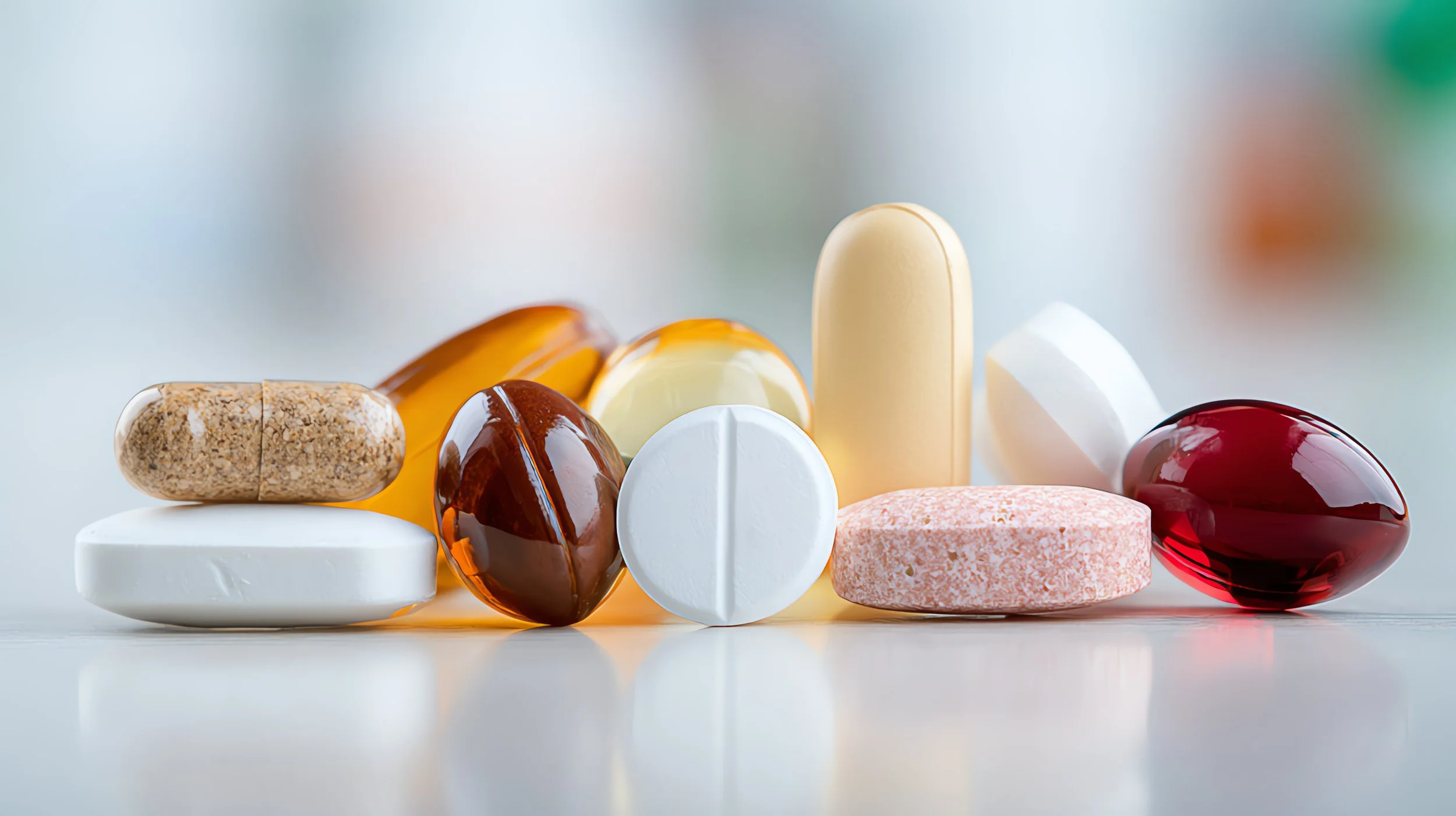
If you have ever gone looking for the supplements to avoid during menopause, this is the sort of thing nobody tells you. I see some version of it every week in clinic. A woman who has done everything she was told to do. Who reads the labels, buys the reputable brands, takes it all religiously. And who is quietly being let down by half the contents of her own supplement drawer.
Here is the uncomfortable truth about supplements for women over 40. A great deal of what we are sold was formulated for a body that no longer exists. Your requirements changed. The products did not. And in a few cases, carrying on regardless is not simply a waste of money. It is actively working against you.
These are the three I ask women to look at first.

1. The multivitamin that still contains iron
This is the one almost nobody thinks about and it is the one I find most often.
Your need for iron falls sharply once your periods stop. It happens quietly. Meanwhile the multivitamin in your cupboard is almost certainly still formulated for a menstruating woman, because that is what the overwhelming majority of women's multivitamins are designed for.
The problem is that the body has no efficient way of getting rid of iron it does not need. It cannot flush the surplus the way it does with vitamin C. So a daily top up you no longer require does not disappear. It builds up.

Why iron supplements after menopause can make you feel worse
The first thing most women notice is digestive. Constipation, bloating, a heavy uncomfortable feeling in the gut. Oral iron is well documented as a cause of exactly these symptoms, at roughly double the rate seen with a placebo.
And here is where it becomes genuinely frustrating. Falling oestrogen already slows gut transit and shifts the balance of the gut microbiome, so bloating during perimenopause is extremely common anyway. Which means a woman feels sluggish and swollen, assumes it is hormonal, decides it is simply her lot now and puts up with it. For years. All the while taking something she does not need that is contributing to the very symptom she has resigned herself to.
There is a more serious concern behind it. Iron in excess acts as a pro oxidant, driving the sort of free radical damage we spend a great deal of effort trying to reduce. And unnecessary supplementation can blur the picture in haemochromatosis, an inherited iron overload condition that very often only reveals itself in women after menopause. Why then? Because monthly blood loss was quietly protecting them for decades. Once that stops, the condition has nowhere to hide.
What to take instead
Switch to an iron free multivitamin, or one formulated for women in your stage of life. They are widely available and cost no more than the one you are already buying.
If you suspect your iron is low, ask for a ferritin test rather than guessing. And hold onto this, because it matters. Low iron after menopause is a symptom, not a diagnosis. Once you are no longer losing blood every month there is a reason for it. That reason needs investigating, not covering up with a tablet.

2. A large calcium supplement taken on its own
Bone loss is real. In the years around your final period the rate of loss speeds up considerably, and wanting to do something about that is entirely sensible.
What is not sensible is what the supplement industry offered you in response, which is an enormous calcium tablet and the strong implication that swallowing it counts as protecting your skeleton.
Why high dose calcium supplements after menopause are the wrong approach
Your gut can only absorb so much calcium at a time. A single large dose sails straight past that ceiling, which means a good proportion of what you have paid for is never absorbed at all. What is left behind sits in the digestive tract, where it commonly causes constipation and bloating and in some women contributes to kidney stones.
There has also been a long running debate in the research about high dose calcium supplements and heart health, with some analyses suggesting a modest increase in cardiovascular events, particularly when calcium is taken without vitamin D alongside it. I want to be straight with you here. That finding is genuinely contested and other researchers have not replicated it. It is not settled science and I am not going to pretend otherwise. But when a product offers questionable benefit, comes with real digestive side effects and carries an unresolved safety question, I would far rather you spent your money on something that actually works.
What calcium alone cannot do for your bones
Bone is living tissue. It is not a storage box you post calcium into.
You need vitamin D to absorb calcium in the first place. You need magnesium, because the enzymes that switch vitamin D into its active form depend on it. Vitamin K2 helps steer calcium into your skeleton rather than into your arteries. And you need protein, because a substantial share of bone is protein matrix.
Calcium is the filler. Protein is the scaffolding. Give your body calcium and nothing else and you have handed it a pile of bricks with no bricklayer.

What to take instead
Food first, always. Dairy if you eat it, tinned sardines and pilchards with the bones in, tofu set with calcium, almonds, fortified plant milks, dark leafy greens.
Then the supporting cast. Vitamin D, because most of us living away from the equator simply cannot make enough from sunlight for a large part of the year. Test your level and work with a practitioner on the right amount for you rather than guessing, because the correct dose really is personal.
Magnesium in the evening, which has the very welcome side effect of helping with sleep and muscle cramps.
Protein at every meal. Not a shake after the gym and toast for the rest of the day. Every meal.
And then the thing no capsule will ever replace. Load your skeleton. Resistance training does more for protecting your bone density than anything you can swallow, and the research on this in women past menopause is genuinely impressive. Bone responds to being asked to work. So ask it.
3. High dose vitamin B6
This is the one that surprises people and it is the one behind the tingling hands.
Vitamin B6 has a reputation as the friendly one. Good for mood, good for hormones, good for energy. It turns up in almost every menopause support formula, every women's B complex and every energy supplement on the shelf. And it very often turns up at many times the amount anyone actually needs.

Vitamin B6 side effects nobody warns you about
B6 is water soluble and most of us were taught that water soluble means harmless because you simply pass the excess. That is not true of B6.
Taken at high doses over a long period, vitamin B6 can cause peripheral neuropathy. Tingling, numbness, burning or pins and needles in the hands and feet, sometimes with unsteadiness. The evidence has been strong enough that European regulators substantially lowered the recommended safe upper limit in recent years, and guidance in a number of countries is more cautious still.
Now think about how easily this stacks up. A woman takes a menopause formula containing a generous amount of B6. She also takes a B complex for energy. Perhaps a magnesium product with B6 added to help absorption. She is now taking far more than the safe ceiling, every day, for years, without ever having made a decision to do so.
And when the symptoms arrive, what does she conclude? That it is her age. Her circulation. Her nerves. She almost never suspects the thing she takes to feel well. Most cases improve once the supplement stops. Not all of them do.
What to take instead
Read every label you own and add up your total B6 across all of it.
Be suspicious of anything marketing large amounts of B6 as a hormone balancer, because the evidence that high doses help menopausal symptoms is thin. Choose a B complex at ordinary everyday amounts instead, which is all the vast majority of women need.
And if you are genuinely dealing with low mood, exhaustion or poor sleep, those deserve proper investigation rather than a big dose of a single vitamin. Thyroid function, ferritin, vitamin D, B12, blood sugar stability and sleep quality are all far more likely to hold the answer.
What I would actually keep in the drawer
Knowing the supplements to avoid during menopause is only half the job. Knowing what deserves to stay is the other half, and for most women over 40 that list is short and unglamorous.
An iron free multivitamin suited to your stage of life. Vitamin D through the darker months, dosed to your own blood level. Magnesium in the evening. Omega 3 if oily fish is not a regular part of your week. And then a proper, honest look at protein, fibre, strength training and sleep, because those four will do more for how you feel than anything sold in a pot.
Supplements fill gaps. They do not replace foundations. Anyone telling you otherwise is selling something.
Always speak to your doctor or a qualified practitioner before starting or stopping any supplement, particularly if you take prescribed medication or have an existing health condition.
Frequently asked questions
Should I still take iron after menopause?
Usually not, unless a blood test shows you need it. Once your periods stop your iron requirement falls sharply and the body cannot easily get rid of what it does not use. Ask for a ferritin test before you supplement, and if your level is low, ask why rather than simply topping it up.
Do calcium supplements prevent osteoporosis?
Calcium on its own does very little. Bone needs vitamin D, magnesium, vitamin K2, adequate protein and mechanical loading through resistance training. Food sources of calcium alongside those other elements will serve you far better than a large tablet taken in isolation.
Can vitamin B6 cause tingling in the hands and feet?
Yes. Sustained high intakes are linked with peripheral neuropathy, which shows up as tingling, numbness or burning in the hands and feet. The risk comes largely from stacking several supplements that each contain B6 without realising the total is adding up.
Which supplements are worth taking during menopause?
For most women the useful short list is an iron free multivitamin, vitamin D dosed to your own blood level, magnesium and omega 3 if you are not eating oily fish regularly. Everything else should earn its place based on your symptoms, your diet and ideally your blood results.
How do I know if a supplement is causing my symptoms?
Look at what started when. If a symptom appeared or worsened within weeks or months of starting something new, that is worth flagging to your doctor or practitioner before you assume it is hormonal or age related.
Where to go from here
If this has left you eyeing your own supplement drawer with fresh suspicion, good. That is precisely where I wanted you to end up.
For the whole picture on how to eat, move and look after yourself through perimenopause and beyond, my book Have a Magnificent Menopause: A Straightforward Guide to Looking Good and Feeling Great covers all of it in plain language. It is an international number one bestselling book and a Business Book Awards 2026 Finalist, written for women who are tired of being told to simply put up with it.
And if you would rather someone looked at your particular situation properly, book a discovery call with me. We can go through what you are taking, what you actually need and what is quietly wasting your money. No pressure and no sales pitch, just a proper conversation about where you are and what would genuinely help. Links below.
References
Baker, J.M., Al-Nakkash, L. and Herbst-Kralovetz, M.M. (2017) 'Estrogen–gut microbiome axis: physiological and clinical implications', Maturitas, 103, pp. 45–53.
Bolland, M.J., Grey, A., Avenell, A., Gamble, G.D. and Reid, I.R. (2011) 'Calcium supplements with or without vitamin D and risk of cardiovascular events: reanalysis of the Women's Health Initiative limited access dataset and meta-analysis', BMJ, 342, d2040.
European Food Safety Authority Panel on Nutrition, Novel Foods and Food Allergens (2023) 'Scientific opinion on the tolerable upper intake level for vitamin B6', EFSA Journal, 21(5), e08006.
Institute of Medicine (2011) Dietary Reference Intakes for Calcium and Vitamin D. Washington, DC: National Academies Press.
Powell, L.W., Seckington, R.C. and Deugnier, Y. (2016) 'Haemochromatosis', The Lancet, 388(10045), pp. 706–716.
Rizzoli, R., Biver, E., Bonjour, J.P., Coxam, V., Goltzman, D., Kanis, J.A., Lappe, J., Rejnmark, L., Sahni, S., Weaver, C., Weiler, H. and Reginster, J.Y. (2018) 'Benefits and safety of dietary protein for bone health: an expert consensus paper', Osteoporosis International, 29(9), pp. 1933–1948.
Scientific Advisory Committee on Nutrition (2016) Vitamin D and Health. London: Public Health England.
Tolkien, Z., Stecher, L., Mander, A.P., Pereira, D.I.A. and Powell, J.J. (2015) 'Ferrous sulfate supplementation causes significant gastrointestinal side-effects in adults: a systematic review and meta-analysis', PLoS ONE, 10(2), e0117383.
Uwitonze, A.M. and Razzaque, M.S. (2018) 'Role of magnesium in vitamin D activation and function', Journal of the American Osteopathic Association, 118(3), pp. 181–189.
Watson, S.L., Weeks, B.K., Weis, L.J., Harding, A.T., Horan, S.A. and Beck, B.R. (2018) 'High-intensity resistance and impact training improves bone mineral density and physical function in postmenopausal women with osteopenia: the LIFTMOR randomized controlled trial', Journal of Bone and Mineral Research, 33(2), pp. 211–220.