
Does HRT Make Your Skin More Sensitive to the Sun? Here's What You Need to Know

Summer is a wonderful time to get outside, boost your vitamin D and enjoy the sunshine. But if you've recently started hormone replacement therapy (HRT), you may have noticed something surprising.
Perhaps you're burning more quickly than you used to. Maybe you've developed new dark patches on your cheeks, forehead or upper lip. Or your skin simply feels more reactive in the sun.
As women move through perimenopause and menopause, our skin naturally changes. Add oestrogen therapy into the mix and those changes can make your skin more sensitive to ultraviolet (UV) radiation. That doesn't mean you should stop taking your HRT but it does mean you need to become a little more sun smart.
How Oestrogen Affects Your Skin
Oestrogen has a significant influence on skin health.
It helps maintain:
collagen production
skin thickness
hydration
wound healing
skin elasticity
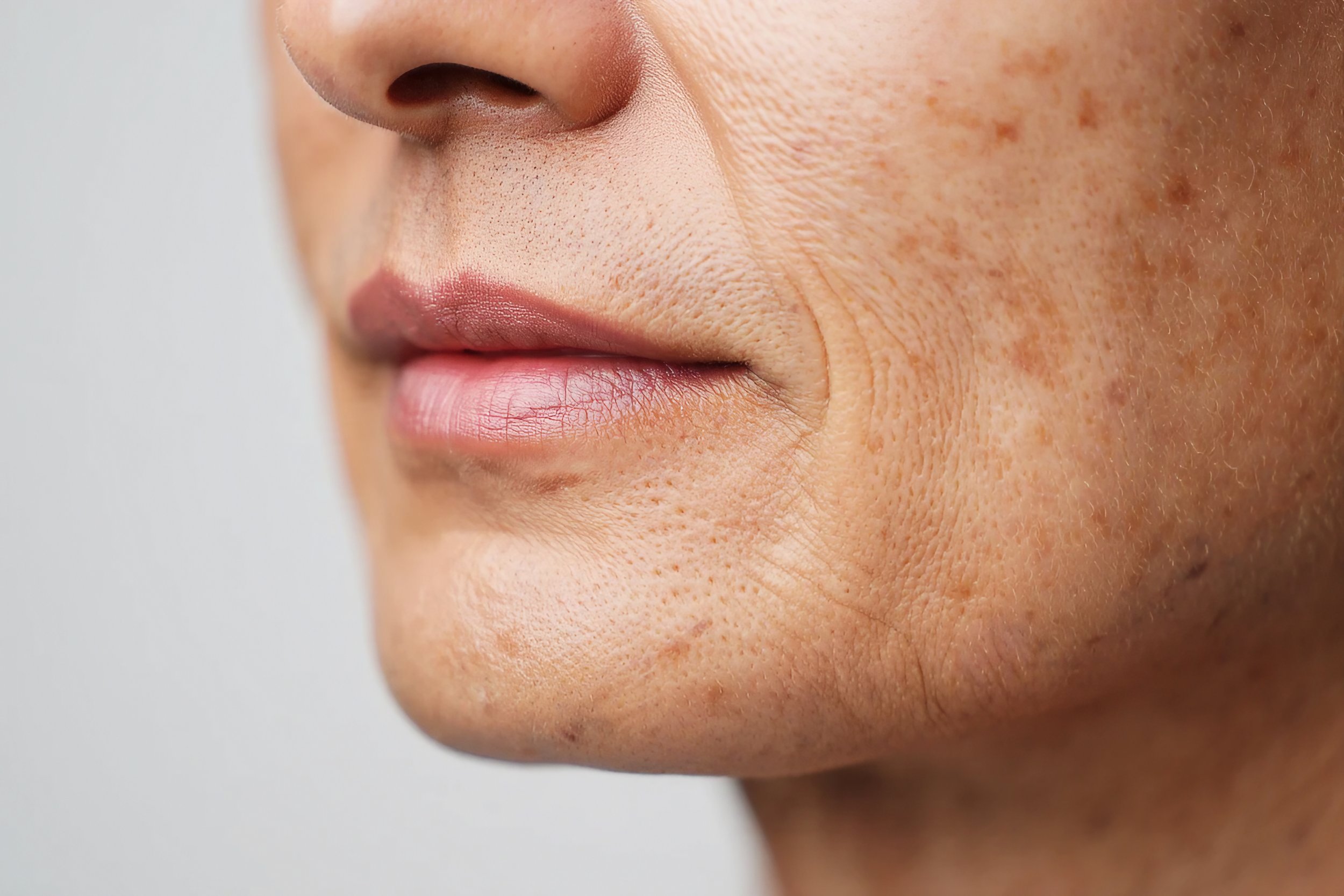
One lesser-known effect is that oestrogen also influences the activity of melanocytes - the cells responsible for producing melanin, the pigment that gives our skin its colour. When these pigment cells become more active, they can respond more strongly to UV exposure. This may increase the likelihood of:
uneven pigmentation
age spots
melasma (sometimes called the "mask of pregnancy")
skin discolouration after sun exposure
This is why many women notice pigmentation changes during pregnancy, when taking the contraceptive pill, or after starting HRT.
Can HRT Increase Sun Sensitivity?
Research suggests that women taking oestrogen-containing hormone therapy may become more sensitive to sunlight.
This doesn't necessarily mean your skin burns dramatically faster, but your individual tolerance may change. If you previously spent 45 minutes comfortably in the sun, you may now notice redness much sooner.
Every woman is different, and factors such as your skin type, genetics, previous sun damage and where you live all play a role. The important point is simply to recognise that your skin may no longer behave the way it did in your thirties.
What About Skin Cancer Risk?
This is where it's important to keep things in perspective.
Some observational studies have reported an association between menopausal hormone therapy and a slightly increased incidence of certain skin cancers, including melanoma. However, these studies cannot prove that HRT causes skin cancer and researchers continue to investigate the reasons behind the findings.
What we do know with certainty is this:
Excessive UV exposure remains the biggest modifiable risk factor for skin cancer.
Around 90% of non-melanoma skin cancers are linked to ultraviolet radiation.
In other words, protecting yourself from the sun has a far greater impact on reducing your risk than avoiding appropriately prescribed hormone therapy.
Please Don't Stop Your HRT Because of This
This is something I really want to emphasise.
If your HRT is improving your quality of life by reducing hot flushes, improving sleep, supporting bone health or helping you feel like yourself again, don't stop taking it because you've read that it may increase sun sensitivity.
Always speak to the healthcare professional who prescribed your treatment before making any changes.
For many women, the benefits of HRT far outweigh the potential risks. The answer isn't stopping your treatment. The answer is protecting your skin.
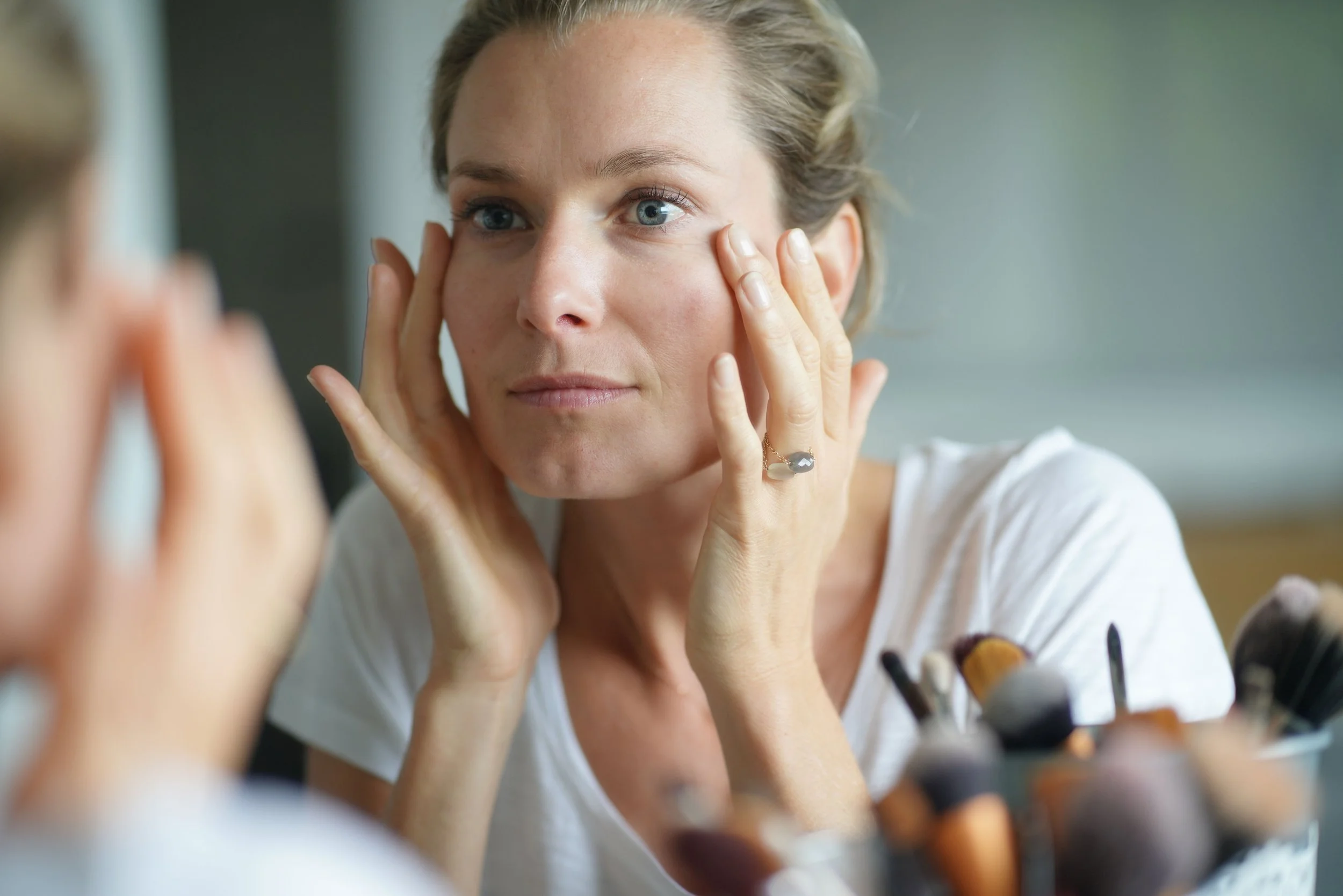
Why Menopausal Skin Needs Extra Care Anyway
Even without HRT, menopausal skin naturally becomes more vulnerable.
As oestrogen levels decline, we lose:
collagen
elastin
natural oils
skin hydration
The skin becomes thinner, drier and less resilient, making it more prone to sun damage, fine lines and pigmentation. Ultraviolet radiation also accelerates collagen breakdown, contributing to premature skin ageing.
This is one reason why women often notice that their skin seems to age more rapidly after menopause.

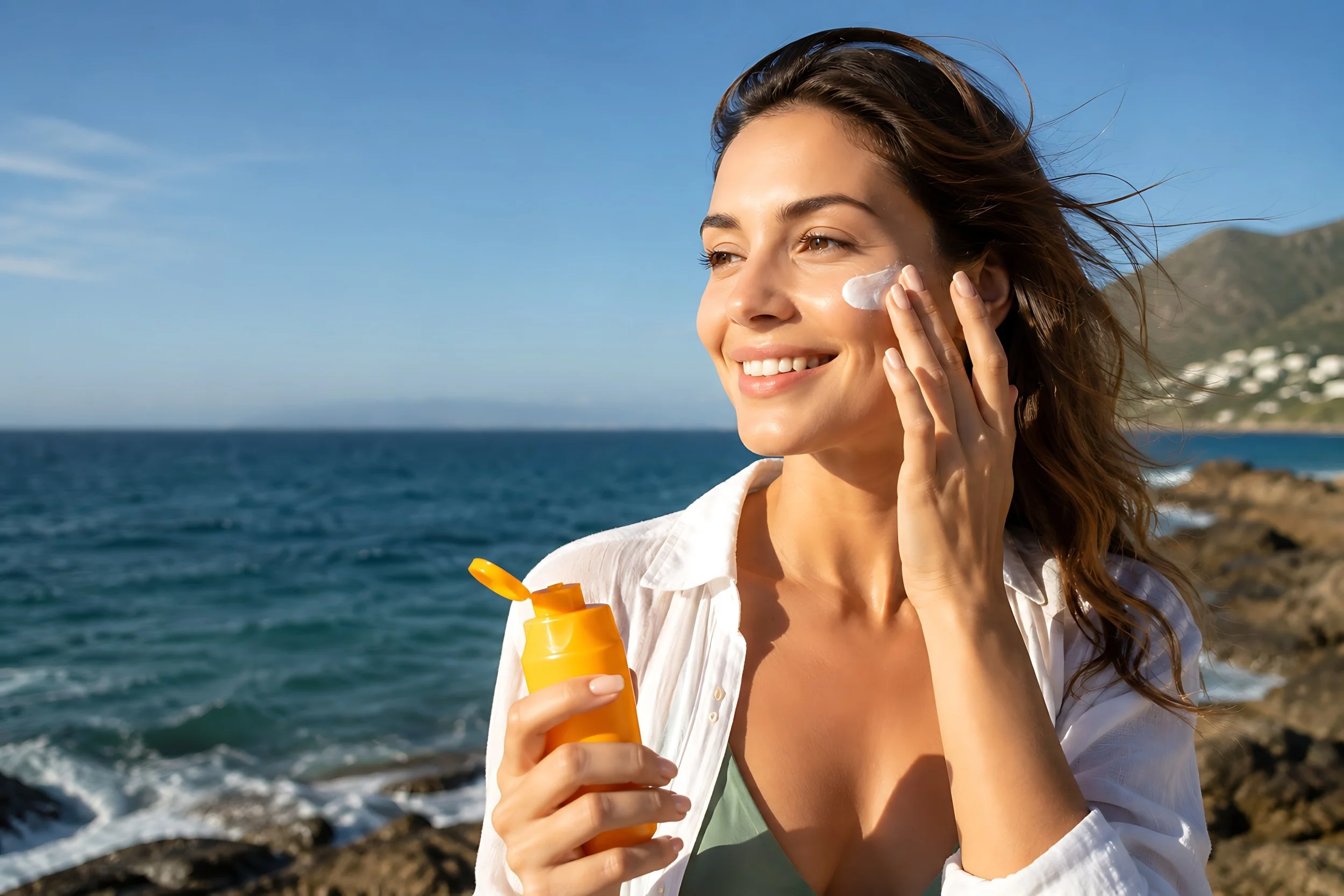
My Top Sun Protection Tips for Women Over 40
Protecting your skin doesn't mean avoiding the outdoors. It simply means being smarter about sun exposure.
I recommend:
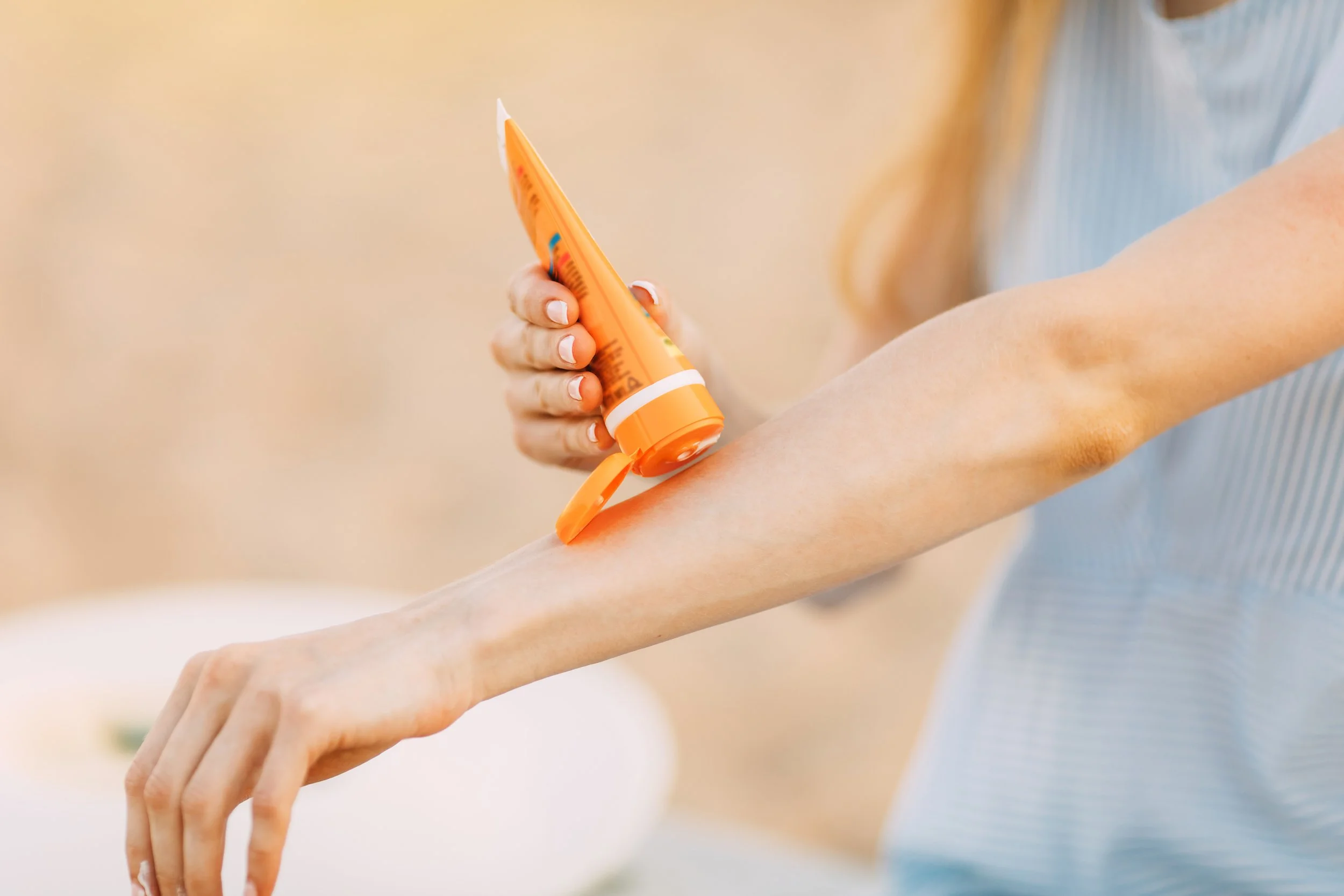
✔ Wear a broad-spectrum SPF 30 or higher every day, even when it's cloudy.
✔ Choose a sunscreen that protects against both UVA and UVB rays.
✔ Reapply sunscreen every two hours if you're outdoors.
✔ Wear a wide-brimmed hat and UV-protective sunglasses.
✔ Cover your shoulders with lightweight clothing when possible.
✔ Seek shade during the strongest sunshine, typically between 11am and 3pm.
✔ Don't forget areas such as your neck, chest and the backs of your hands.
✔ Remember that UVA rays penetrate clouds and glass, meaning they contribute to skin ageing throughout the year, not just on sunny holidays.
The Bottom Line
If you're taking HRT, it's worth being aware that your skin may become a little more sensitive to the sun.
That doesn't mean you should avoid sunlight altogether or stop your treatment. Instead, understand how your skin is changing, protect it well, and continue enjoying the many benefits of spending time outdoors safely.
Healthy ageing isn't about avoiding life. It's about making informed choices that help you feel your best while protecting your health for the years ahead.
Want more practical advice to support your skin, health and confidence during menopause? Discover more in my book, Have a Magnificent Menopause. Order your copy today via the link below.
References
Gandini, S., et al. (2005). Meta-analysis of risk factors for cutaneous melanoma: II. Sun exposure. European Journal of Cancer, 41(1), 45–60.
International Agency for Research on Cancer (IARC). (2012). Radiation Volume 100D: Solar and Ultraviolet Radiation.
Mattsson, Å., et al. (2023). Menopausal hormone therapy and risk of skin cancer in the MISS cohort. (Observational cohort study).
National Institute for Health and Care Excellence (NICE). (2024). Menopause: Diagnosis and Management (NG23).
NHS. (2024). Hormone replacement therapy (HRT).https://www.nhs.uk/conditions/hormone-replacement-therapy-hrt/
World Health Organization. (2024). Ultraviolet Radiation and Health.
American Academy of Dermatology. (2024). Skin Cancer Prevention and Sun Safe