
Menopause Belly? You're Not Eating Too Much. You're Eating for a Body You No Longer Have
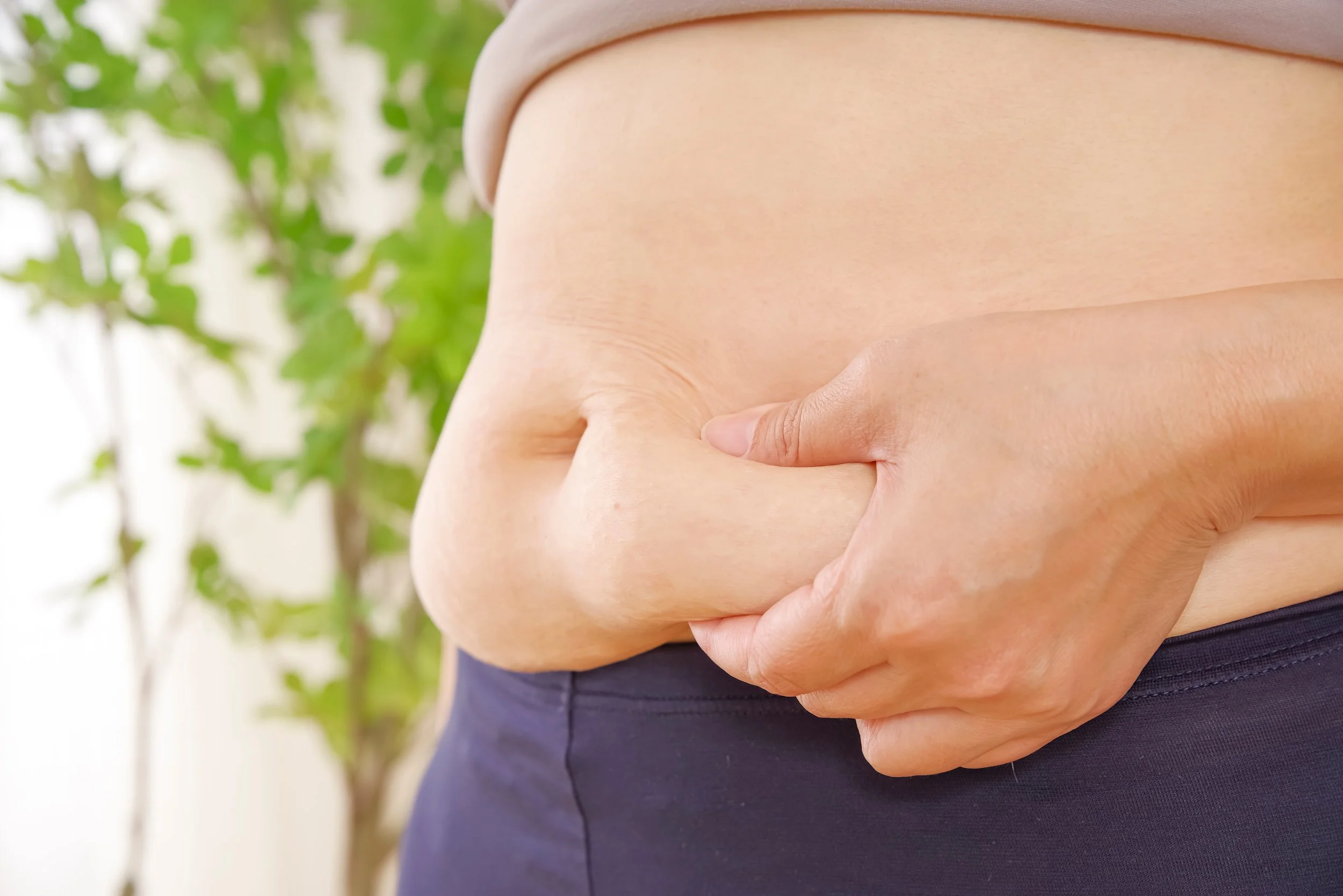
Here is the truth nobody has explained to you. The portions, the meals and the habits that kept you steady for 30 years were designed for a body with different hormones, more muscle and a faster metabolism. That body has changed. The instructions haven't. Menopause belly is what happens in the gap between the two and it has nothing to do with willpower or "letting yourself go". Once you understand the new rules, you can start working with your body instead of fighting it.
I am a registered nutritional therapist and I have spent more than 30 years working in women's health, skin and wellness. The weight conversation comes up in almost every consultation I have with women over 40 and almost every one of them arrives blaming herself. So let's put the blame down and look at what is actually going on.
Why does menopause cause belly fat?
The short answer is oestrogen. As oestrogen declines through perimenopause and menopause, your body changes where it stores fat. For most of your adult life, oestrogen encouraged fat storage around your hips and thighs. When levels fall, storage shifts towards your middle, and specifically towards visceral fat, the deeper fat that sits around your organs.
This is why so many women say "I haven't gained that much weight but my shape has completely changed". Both things are true. You can weigh almost the same and still develop a menopause belly, because this is about redistribution as much as gain.
There is more going on underneath too. Falling oestrogen affects how sensitive your cells are to insulin, the hormone that manages your blood sugar. When insulin sensitivity drops, your body becomes more inclined to store energy as fat, particularly around the middle and you may notice stronger cravings and energy dips between meals.

Why doesn't eating less work any more?
Because the "eat less, move more" formula was built on a metabolism you no longer have.
From around our mid 30s we all begin to lose muscle, a process called sarcopenia and the hormonal changes of menopause accelerate it. Muscle is metabolically expensive tissue. It burns energy even when you are sitting still. Less muscle means a lower resting metabolic rate, so the portion sizes that maintained your weight at 35 can quietly become surplus at 50.
Here is the part that catches so many women out. When you respond by eating much less, especially by cutting protein, your body sheds even more muscle along with any fat. Your metabolism slows further, the weight creeps back and you conclude you have failed. You haven't failed. The strategy has.
Crash dieting in menopause is a bit like trying to fix a leaking roof by turning off the water. It misses the actual problem and creates new ones, particularly for your bones and long term strength.
What role do stress and sleep play in menopause weight gain?
A far bigger one than most weight loss advice admits.
Cortisol, your main stress hormone, encourages fat storage around the middle. Menopause can be a stressful season of life in its own right and broken sleep from night sweats or 3am wide-awake sessions pushes cortisol higher still. Poor sleep also disrupts the hormones that regulate appetite, which is why a bad night so often ends in a day of grazing and sugar cravings.
So if you are exhausted, wired and gaining around your waist, those things are connected. Addressing sleep and stress is a priority . For many of my clients it is the thing that finally gets results moving.

What actually helps with menopause belly?
Here is what I focus on in clinic and what the research consistently supports.
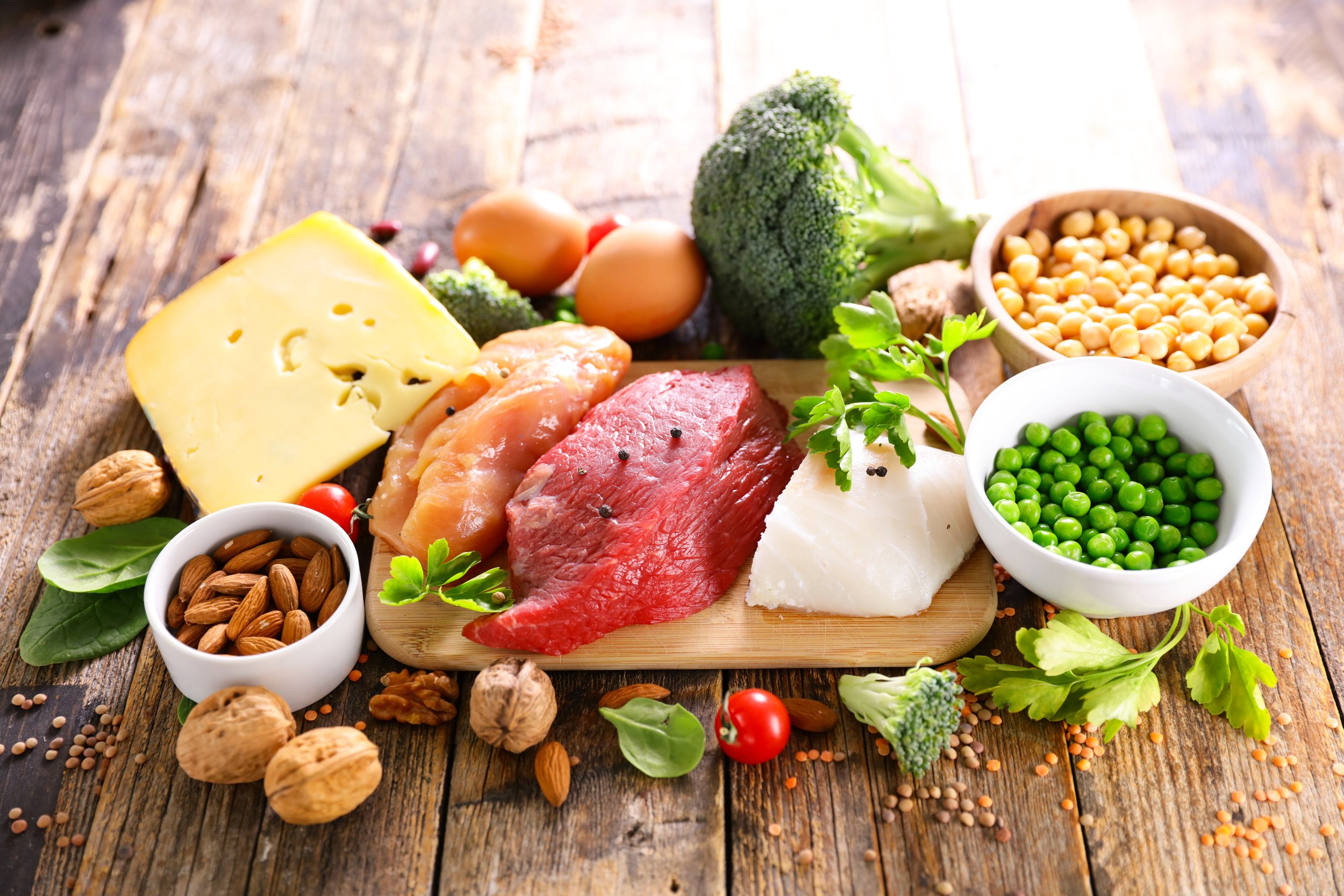
Prioritise protein at every meal. Protein protects your muscle, keeps you full and steadies your blood sugar. Most women I see are eating far less than they need. Aim to build each meal around a palm sized portion or more, whether that is eggs, fish, poultry, dairy, beans or lentils.
Lift something heavy. Strength training is the single most underrated tool for menopause weight gain. It rebuilds the muscle that keeps your metabolism running and protects your bones at the exact time they need it most. Two to three sessions a week genuinely changes things and you do not need a gym membership to start.
Steady your blood sugar. Base meals on protein, fibre and healthy fats and be a little more strategic with refined carbohydrates and alcohol than you used to be. This is not about banning anything. It is about reducing the blood sugar rollercoaster that drives fat storage and cravings.
Take sleep seriously. Treat it as part of your weight strategy, not a luxury. A consistent wind down, a cool bedroom and a caffeine curfew from early afternoon all help.
Consider HRT as part of the picture. HRT can help with the symptoms that sabotage your efforts, particularly sleep and hot flushes and that is a conversation to have with your doctor. In my experience the women who do best combine appropriate medical support with the nutrition and lifestyle foundations above. It is never either or.
How long does it take to lose menopause belly?
Slower than the internet promises and faster than you fear. When women rebuild muscle, steady their blood sugar and sort their sleep, most notice their energy and cravings improve within a few weeks, with shape changes following over months. The goal is a body that works with you for the next 40 years, not a quick fix that costs you muscle and bone.
You are not the problem
If you take one thing from this article, let it be this. Menopause belly is a predictable response to a hormonal shift, not a character flaw. Your body is not broken and you are not lazy. You have simply been given the wrong instructions for this stage of life. The right instructions exist, they are not extreme and they work.

FAQs about menopause belly
Does menopause belly go away on its own? Not usually. The hormonal shift behind it is permanent, so the approach that helps is a lasting change in how you eat, move and sleep rather than waiting it out or short term dieting. The encouraging part is that visceral fat responds well to the right strategy.
Can you lose belly fat during perimenopause? Yes. Perimenopause is actually an ideal time to act, because building muscle and steadying blood sugar early makes the whole transition easier. The same principles apply: protein, strength training, blood sugar balance and proper sleep.
Is menopause belly dangerous? Visceral fat is more metabolically active than the fat under your skin and is linked with higher risks to heart and metabolic health, which matter more for women after menopause. That is a reason to take it seriously, never a reason to panic or crash diet.
Do I need to cut carbs completely in menopause? No. Extreme low carb approaches are rarely sustainable and can affect sleep, mood and energy. Focus on the quality and timing of carbohydrates, pair them with protein and fibre, and keep the foods you love in your life.

Ready to work with your body instead of against it?
If this article felt like someone finally explaining what is going on, there is plenty more where it came from.
My number one bestselling book Have a Magnificent Menopausewalks you through the whole picture, from hormones and weight to skin, sleep and energy, with practical steps you can start today. Link to book is below.
And if you would rather have a plan built around you, your history and your life, book a free discovery call with me. We will talk about where you are, what you have tried and how I can help. Link to discovery call booking below.
This article is for information only and is not a substitute for medical advice. Always speak to your doctor about treatment options including HRT.
References
Coppola, A. et al. (2026) 'The impact of the menopausal transition on body composition and abdominal fat redistribution', Journal of Clinical Medicine, 15(2), 740. Available at: https://www.mdpi.com/2077-0383/15/2/740 (Accessed: 13 July 2026).
Den Hartigh, L.J. et al. (2025) 'Metabolic impact of endogenously produced estrogens by adipose tissue in females and males across the lifespan', Frontiers in Endocrinology, 16, 1682231. Available at: https://www.frontiersin.org/journals/endocrinology/articles/10.3389/fendo.2025.1682231/full (Accessed: 13 July 2026).
Vecchiatto, B. et al. (2025) 'Healthy adipose tissue after menopause: contribution of balanced diet and physical exercise', Exploration of Endocrine and Metabolic Diseases, 2, 101424. Available at: https://doi.org/10.37349/eemd.2025.101424 (Accessed: 13 July 2026).
Mishra, S. et al. (2025) 'Estrogen and metabolism: navigating hormonal transitions from perimenopause to postmenopause', Journal of Mid-life Health, 16(3). Available at: https://pmc.ncbi.nlm.nih.gov/articles/PMC12431702/ (Accessed: 13 July 2026).
Moore, S.R. et al. (2024) 'The impact of protein in post-menopausal women on muscle mass and strength: a narrative review', Physiologia, 4(3), pp. 266-285. Available at: https://doi.org/10.3390/physiologia4030016 (Accessed: 13 July 2026).
Nowak, A. et al. (2024) 'Analysis of combinatory effects of free weight resistance training and a high-protein diet on body composition and strength capacity in postmenopausal women: a 12-week randomized controlled trial', Heliyon. Available at: https://pmc.ncbi.nlm.nih.gov/articles/PMC12877237/ (Accessed: 13 July 2026).
Nahas, P.C. et al. (2019) 'Moderate increase in protein intake promotes a small additional improvement in functional capacity, but not in muscle strength and lean mass quality, in postmenopausal women following resistance exercise: a randomized clinical trial', Nutrients, 11(6), 1323. Available at: https://doi.org/10.3390/nu11061323 (Accessed: 13 July 2026).
Woods, N.F. et al. (2006) 'Cortisol levels during the menopausal transition and early postmenopause: observations from the Seattle Midlife Women's Health Study', Menopause, 13(2), pp. 212-221. Available at: https://pubmed.ncbi.nlm.nih.gov/16645536/ (Accessed: 13 July 2026).
Faubion, S.S. et al. (2022) 'The 2022 hormone therapy position statement of The North American Menopause Society', Menopause, 29(7), pp. 767-794. Available at: https://doi.org/10.1097/GME.0000000000002028 (Accessed: 13 July 2026).
National Institute for Health and Care Excellence (2024) Menopause: identification and management (NG23). London: NICE. Available at: https://www.nice.org.uk/guidance/ng23 (Accessed: 13 July 2026).