

Protein has dominated the wellness conversation for years. From protein powders and bars to high protein breakfasts and snacks, it has been positioned as the key nutrient for energy, weight management, muscle tone and overall health. More recently, fibre has started to gain attention, with headlines questioning whether fibre is now the new protein.
While fibre is certainly having a moment, the real story is not about choosing one over the other. For women, fibre and protein play very different but equally important roles, and the best results come when both are prioritised together.
Why Fibre Is Suddenly Getting So Much Attention
Fibre has always been important, but it has often been overlooked in favour of more fashionable nutrition trends. What has changed is our growing understanding of gut health and how deeply connected it is to almost every system in the body.
Fibre supports digestion, feeds beneficial gut bacteria, helps regulate blood sugar levels and contributes to heart health. It also plays a key role in appetite control by helping meals feel more satisfying and slowing digestion. Many women are unknowingly eating far less fibre than their body needs, which can show up as bloating, constipation, energy dips, cravings or difficulty managing weight.
This renewed focus on fibre is less about hype and more about finally addressing a widespread nutritional gap.

What Fibre Actually Does in the Body
Fibre is a type of carbohydrate found in plant foods, but unlike most carbs, your body cannot fully break it down. Instead, it travels through your digestive system and does some of its best work along the way. Fibre supports gut health, blood sugar balance, and hormone elimination, which is why it matters so much for women.
There are two main types of fibre, and you need both. Insoluble fibre adds bulk and helps keep bowel movements regular, which supports healthy transit time through the gut. Soluble fibre absorbs water and forms a gel like substance. This slows digestion and helps steady the release of glucose into the bloodstream, which can reduce blood sugar spikes, improve energy levels, and support appetite control.
One of fibre’s most powerful roles happens in the large intestine. Certain fibres act as fuel for your beneficial gut bacteria. When these bacteria ferment fibre, they produce compounds called short chain fatty acids. These support gut lining integrity, help calm inflammation, and are linked with better metabolic health. In simple terms, fibre helps your gut microbiome do its job properly, and that impacts far more than digestion.
Fibre and hormones: why women need to pay attention
This is where fibre becomes especially relevant for women. Your gut plays a major role in hormone balance, particularly in how hormones are processed and eliminated from the body. After your body has used hormones such as oestrogen, they are broken down by the liver and packaged for removal through bile. From there, they pass into the gut and should be excreted in the stool. If bowel movements are sluggish, or if the gut microbiome is out of balance, those hormones can be reabsorbed and recirculated instead of leaving the body.
This matters because hormone recirculation can contribute to symptoms many women recognise, such as bloating, breast tenderness, heavy periods in perimenopause, irritability, skin flare ups and that general feeling of being hormonally out of sorts. Fibre supports regular elimination, which helps your body clear used hormones more efficiently.
Your gut bacteria also influence how oestrogen is metabolised through a collection of microbes sometimes referred to as the oestrobolome. When the microbiome is diverse and well supported, hormone metabolism tends to be more balanced. When it is disrupted, it can affect how oestrogen is processed, which may impact symptoms and overall hormone harmony.

Fibre, blood sugar and cortisol
Fibre also supports hormones indirectly through blood sugar balance. When blood sugar rises and crashes, cortisol often rises too, and cortisol can worsen sleep, increase cravings, and make weight management feel harder. Soluble fibre helps slow the absorption of carbohydrates and supports steadier blood sugar levels, which can help reduce the stress response in the body over time.
This is one reason fibre rich meals often feel calmer in the body. You feel satisfied, your energy is steadier, and you are less likely to get that mid afternoon slump that sends you hunting for something sweet.
When fibre intake is consistently low
When fibre intake is consistently low, digestion can become sluggish, gut bacteria diversity can decline, and blood sugar swings can become more common. During hormonal change or periods of stress, this can make symptoms feel more intense. Many women notice they feel more bloated, more reactive to foods, more snacky, and less resilient overall.
The goal is not to suddenly double your fibre overnight. The goal is to build it gently, consistently and with variety, so your gut can adapt and your hormones can benefit.
Why Protein Still Matters for Women
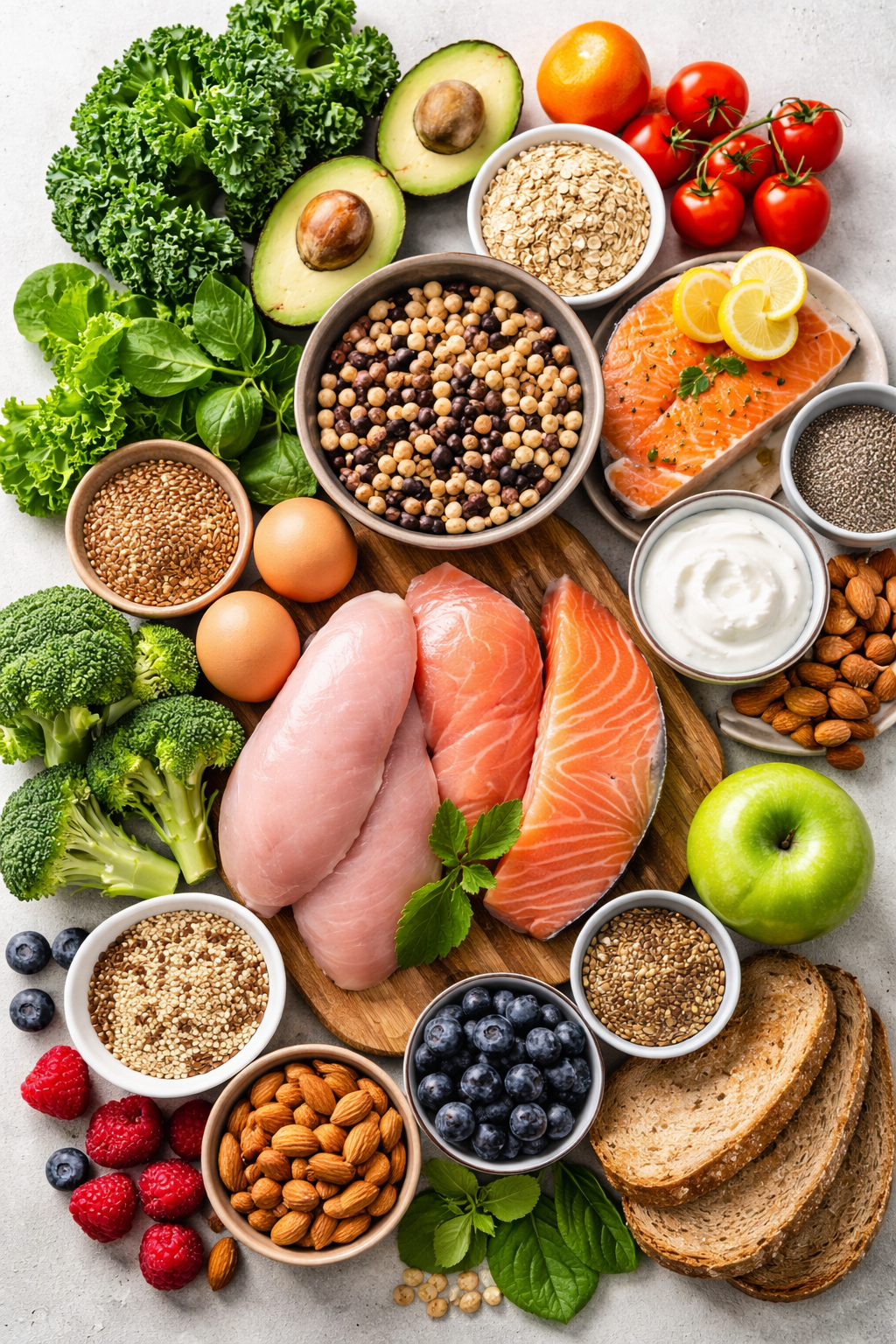
Despite the current focus on fibre, protein remains essential for women’s health. Protein is critical for maintaining muscle mass, supporting bone health, preserving metabolic rate and contributing to healthy skin, hair and nails.
As women age, muscle loss becomes more likely, especially if protein intake is inadequate. Protein also helps stabilise appetite by promoting fullness and reducing the likelihood of overeating or snacking driven by blood sugar dips.
This is why protein should not be sidelined. It continues to play a central role in supporting strength, resilience and long term health.

Why Fibre and Protein Work Best Together
Rather than competing, fibre and protein complement each other. Protein supports structure and repair, while fibre helps regulate digestion, blood sugar and appetite.
Meals that contain both protein and fibre tend to keep women fuller for longer, support steadier energy levels and reduce cravings later in the day. This combination is particularly helpful for women experiencing fatigue, digestive discomfort or weight changes, as it creates a more balanced metabolic response to food.
Focusing on one nutrient without the other often leads to frustration, whereas prioritising both brings more sustainable results.
How Much Fibre and Protein Do Women Need
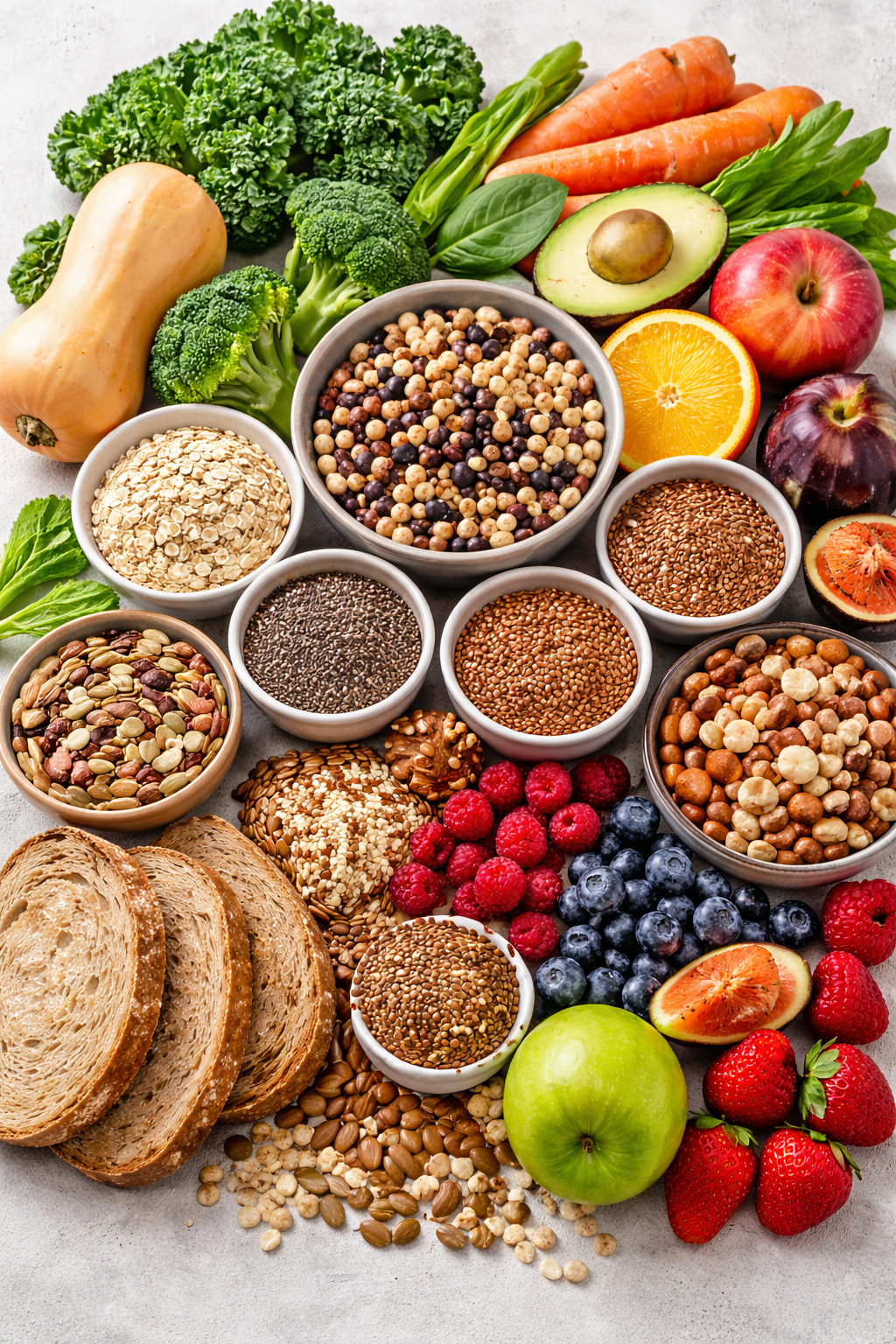
There is no need for perfection or rigid targets. What matters most is consistency and variety. Including fibre rich foods such as vegetables, fruit, legumes, seeds and whole grains throughout the day is a practical starting point. Protein should also be included at each meal, using a mix of sources such as eggs, fish, poultry, dairy, tofu or beans depending on individual preferences.
Balanced meals built around whole foods naturally provide a mix of fibre, protein and other essential nutrients.
Increasing Fibre Without Digestive Discomfort
One common mistake is increasing fibre too quickly. This can lead to bloating or discomfort, especially if the gut is already sensitive.
Fibre should be increased gradually, allowing the digestive system time to adapt. Drinking enough water is also important, as fibre relies on fluid to move comfortably through the gut. Whole foods should always be prioritised over fibre supplements unless otherwise advised.
Fibre is not replacing protein, but it is finally getting the recognition it deserves. For women, both nutrients are essential and work best when included together as part of a balanced, realistic approach to eating.
Rather than chasing trends, focusing on fibre and protein as part of everyday meals supports better digestion, steadier energy, improved appetite control and long term health. Sometimes the most powerful changes come from returning to the basics and doing them consistently well.
Want to Go Deeper?
If this resonates, and you want practical, realistic ways to support your gut, hormones, energy and weight without extremes, my book Have a Magnificent Menopause: A Straightforward Guide to Looking Good and Feeling Great dives much deeper into this.
Inside, I share exactly how nutrition, gut health, blood sugar balance, stress and lifestyle all connect, with clear explanations and simple steps you can actually stick to. It is written for women who want to feel better in their body, calmer in their mind, and more like themselves again.
You can find the book link below
References
Adlercreutz, H. and Martin, F. (1980) ‘Biliary excretion and intestinal metabolism of progesterone and estrogens in man’, Journal of Steroid Biochemistry, 13(2), pp. 231 to 244.
Chew, K.Y. and Brownlee, I.A. (2018) ‘The impact of supplementation with dietary fibers on weight loss: A systematic review of randomised controlled trials’, Bioactive Carbohydrates and Dietary Fibre, 14, pp. 9 to 19.
Clark, M.J. and Slavin, J.L. (2013) ‘The effect of fiber on satiety and food intake: A systematic review’, Journal of the American College of Nutrition, 32(3), pp. 200 to 211.
Evans, C.E.L. (2020) ‘Dietary fibre and cardiovascular health: A review of current evidence and policy’, Proceedings of the Nutrition Society, 79(1), pp. 61 to 67.
Flores, R., Shi, J., Fuhrman, B., Xu, X., Veenstra, T.D., Gail, M.H. and Gajer, P. et al. (2012) ‘Fecal microbial determinants of fecal and systemic estrogens and estrogen metabolites: A cross sectional study’, Journal of Translational Medicine, 10, Article 253.
Hu, S., Wang, L., Yang, D., Li, L., Togo, J., Wu, Y. and Liu, Q. (2023) ‘Gut microbial beta glucuronidase: A vital regulator in female health’, Gut Microbes, 15(1), Article 2236749.
Larnder, A.H., Russ, B.E., Visavadiya, N.P., Reddy, N., Zylberberg, H.M. and Efrat, R. et al. (2025) ‘The estrobolome: Estrogen metabolizing pathways of gastrointestinal microbes and their role in human health’, International Journal of Cancer, 156(2), pp. 245 to 260.
Ney, L.M., Wipplinger, M., Grossmann, M., Engert, N., Wegner, V.D. and Mosig, A.S. (2023) ‘Short chain fatty acids: Key regulators of the local and systemic immune response in inflammatory diseases and infections’, Open Biology, 13(3), Article 230014.
Peters, B.A., Shapiro, J.A., Church, T.R., Miller, G., Trinh Shevrin, C. and Yao, T. et al. (2022) ‘Spotlight on the gut microbiome in menopause: Current insights’, International Journal of Women’s Health, 14, pp. 1059 to 1072.
Reynolds, A., Mann, J., Cummings, J., Winter, N., Mete, E. and Te Morenga, L. (2019) ‘Carbohydrate quality and human health: A series of systematic reviews and meta analyses’, The Lancet, 393(10170), pp. 434 to 445.
Reynolds, A.N., Akerman, A.P. and Mann, J. (2020) ‘Dietary fibre and whole grains in diabetes management: Systematic review and meta analyses’, PLOS Medicine, 17(3), Article e1003053.
Xie, Y., Zong, M., Hu, X., Li, L., Deng, X. and Yuan, H. et al. (2021) ‘Effects of soluble fiber supplementation on glycemic control in adults with type 2 diabetes mellitus: A systematic review and meta analysis of randomized controlled trials’, Clinical Nutrition, 40(4), pp. 1800 to 1810.
Xiong, R.G., Zhou, D.D., Wu, S.X., Huang, S.Y., Yang, Z.J. and Saimaiti, A. et al. (2022) ‘Health benefits and side effects of short chain fatty acids’, Foods, 11(18), Article 2863.
SEO details
SEO title:
Is Fibre the New Protein? Why Women Need Both
Meta description:
Fibre is trending, but protein still matters. Learn why women need both fibre and protein to support gut health, energy, blood sugar balance and weight management.
Keywords:
fibre vs protein
fibre benefits for women
protein and fibre balance
gut health fibre
blood sugar balance nutrition
If you want, I can now optimise this further for Google, adapt it for Medium, or create a short teaser post to promote it on social media.
ChatGPT kan begå misstag. Kontrollera viktig infor