
Can't Switch Off at Night in Menopause? Why Your Body Has Forgotten How to Rest

You are exhausted. You have been running on empty since lunchtime, desperate for sleep.
And yet here you are at two in the morning, wide awake, staring at the ceiling, with a mind that will not stop and a body that feels somehow both drained and buzzing at the same time. Wired and tired, as so many women describe it to me.
This is one of the most common things women bring to me and there is a real, physical reason behind it. Your body has forgotten how to rest. It can be reminded and one of the gentlest ways to do that is something we talk about far too little: therapeutic touch. It is the reason I created the Meno Massage Method®, a treatment designed specifically to calm the overstretched nervous system of women in perimenopause, menopause and beyond.
Let me explain what is going on and what helps.
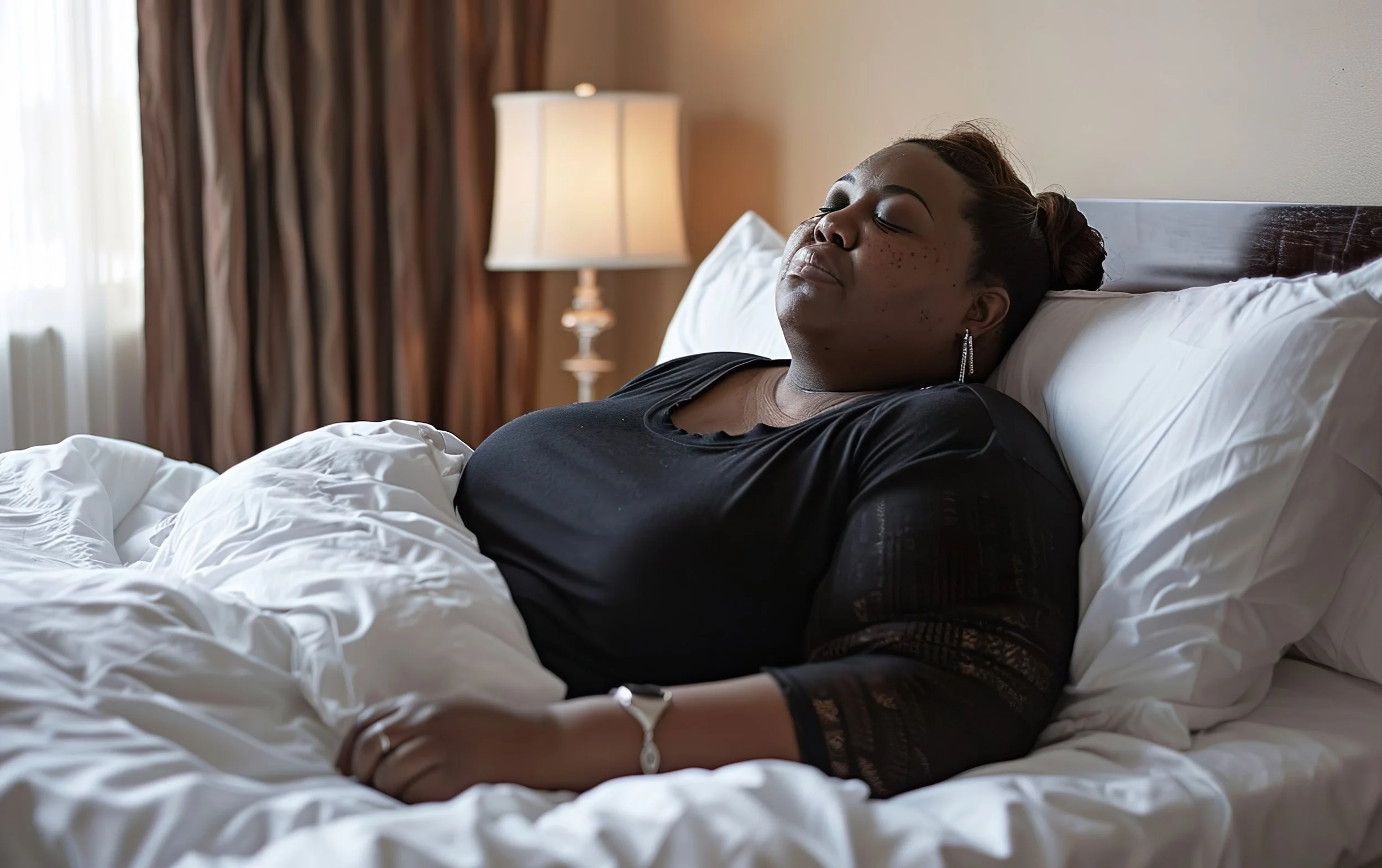
Why menopause steals your sleep
Sleep problems are not a minor footnote of menopause. They are one of its defining features. There are a few reasons the nights become so difficult.
The first is hormonal. Oestrogen and progesterone both play a part in sleep and progesterone in particular has a calming, sleep-friendly quality. As both hormones decline and fluctuate through perimenopause and beyond, that built-in help fades away. Add hot flushes and night sweats, which have a habit of surfacing in the small hours and sleep becomes broken and shallow.
But there is a second reason and it is the one I find women are rarely told about. It is what is happening to your nervous system.
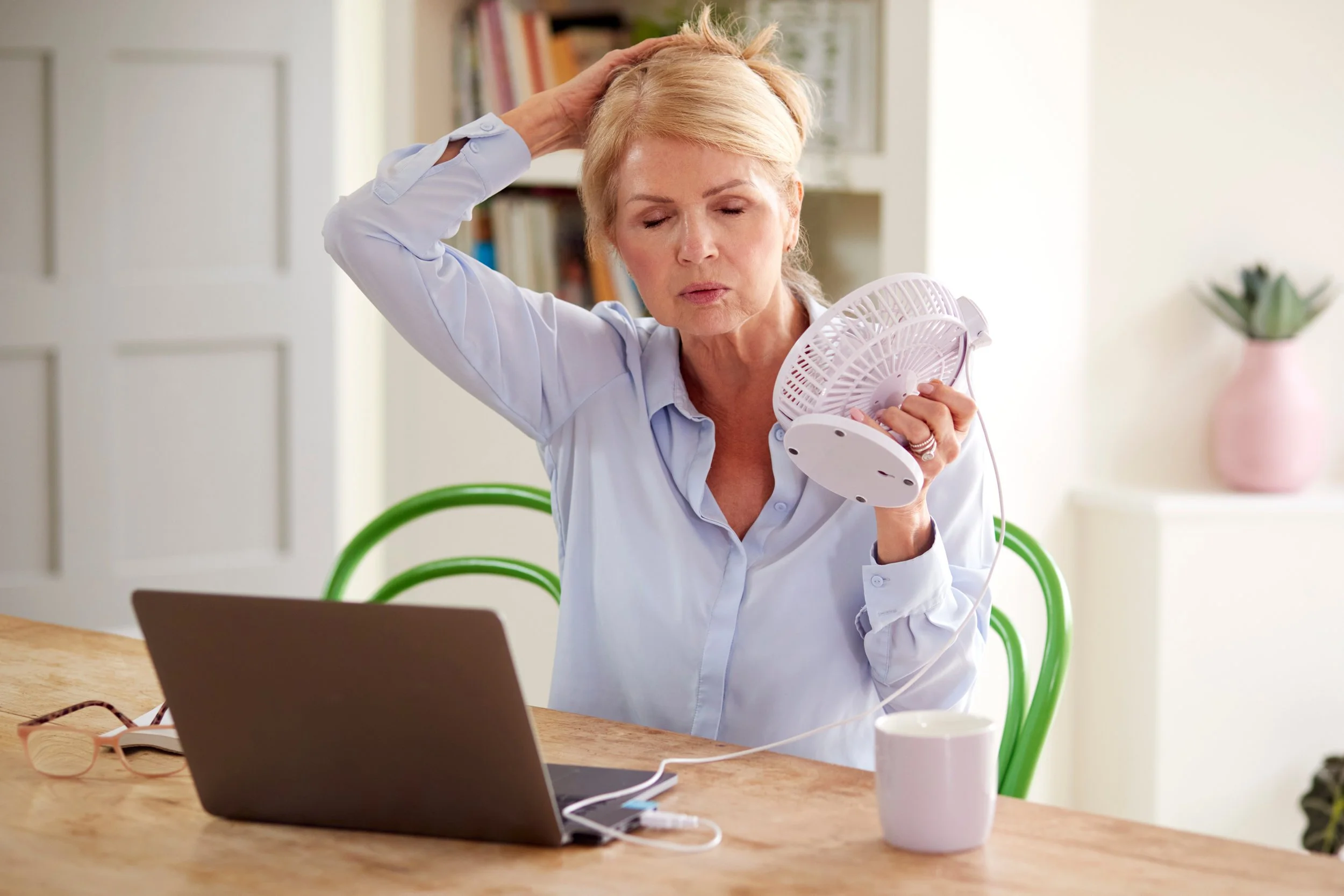
The wired and tired trap
Your nervous system has two gears. One is the "fight or flight" state, run by the sympathetic nervous system, which revs you up to deal with demands and stress. The other is the "rest and digest" state, run by the parasympathetic nervous system, which is where sleep, repair and calm live.
The trouble is that so many women reach their late forties and fifties running almost permanently in that first gear. Careers, teenagers, ageing parents, the sheer mental load most women carry. And menopause pours fuel on the fire, because falling oestrogen is linked with higher levels of cortisol, your main stress hormone. Cortisol is supposed to be high in the morning to get you going and low at night to let you sleep. When it stays stubbornly raised into the evening, your body cannot shift down into the gear where sleep happens.
That is the wired and tired trap. Your body has forgotten how to switch off, not because you are failing, but because it is being asked to run in overdrive at the exact time of life its natural brakes are wearing thin.
So how do you teach a stuck nervous system to find its rest gear again?
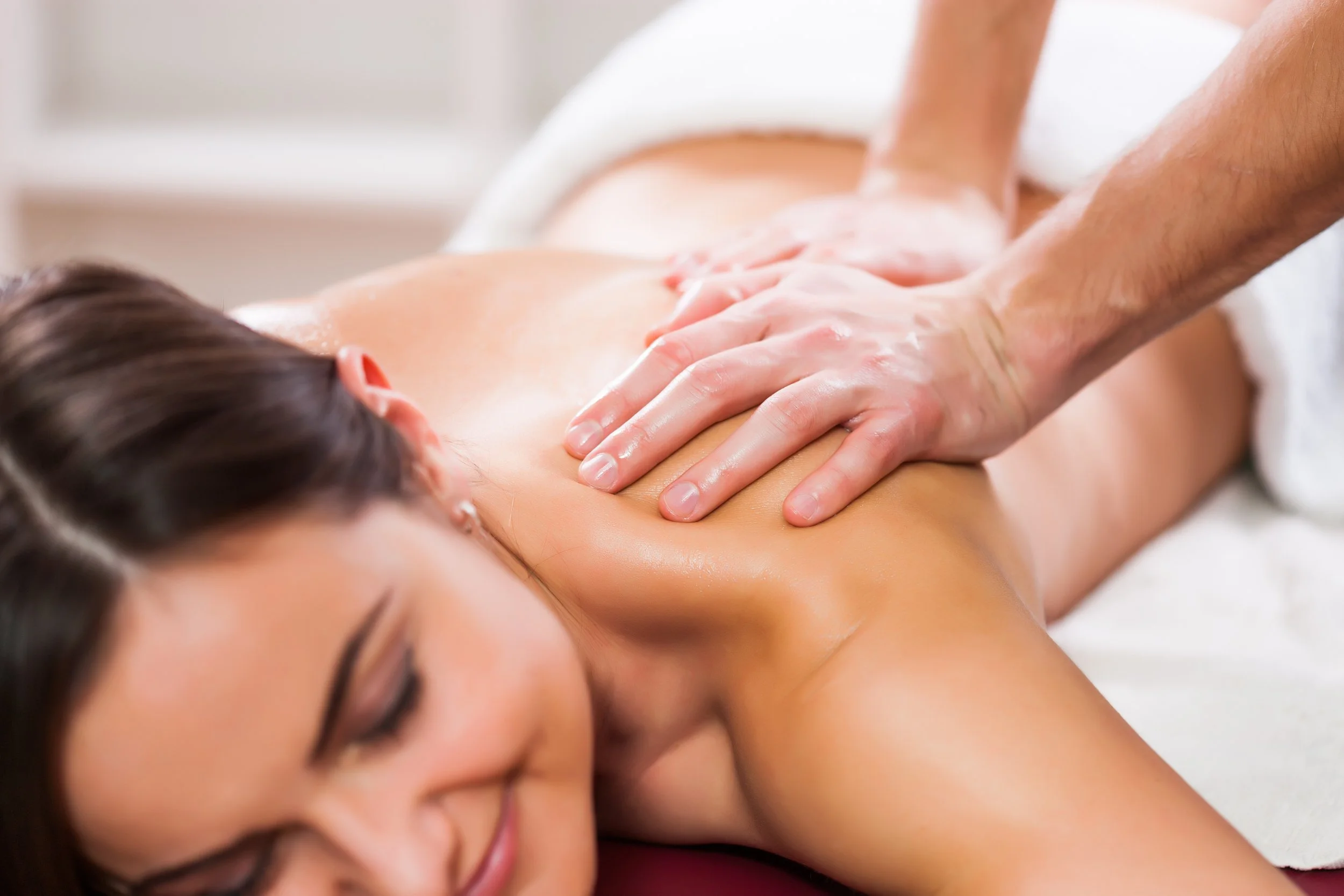
Why touch is one of the answers
Here I want to talk about something that does not get taken seriously enough, because it feels too simple to matter. Touch.
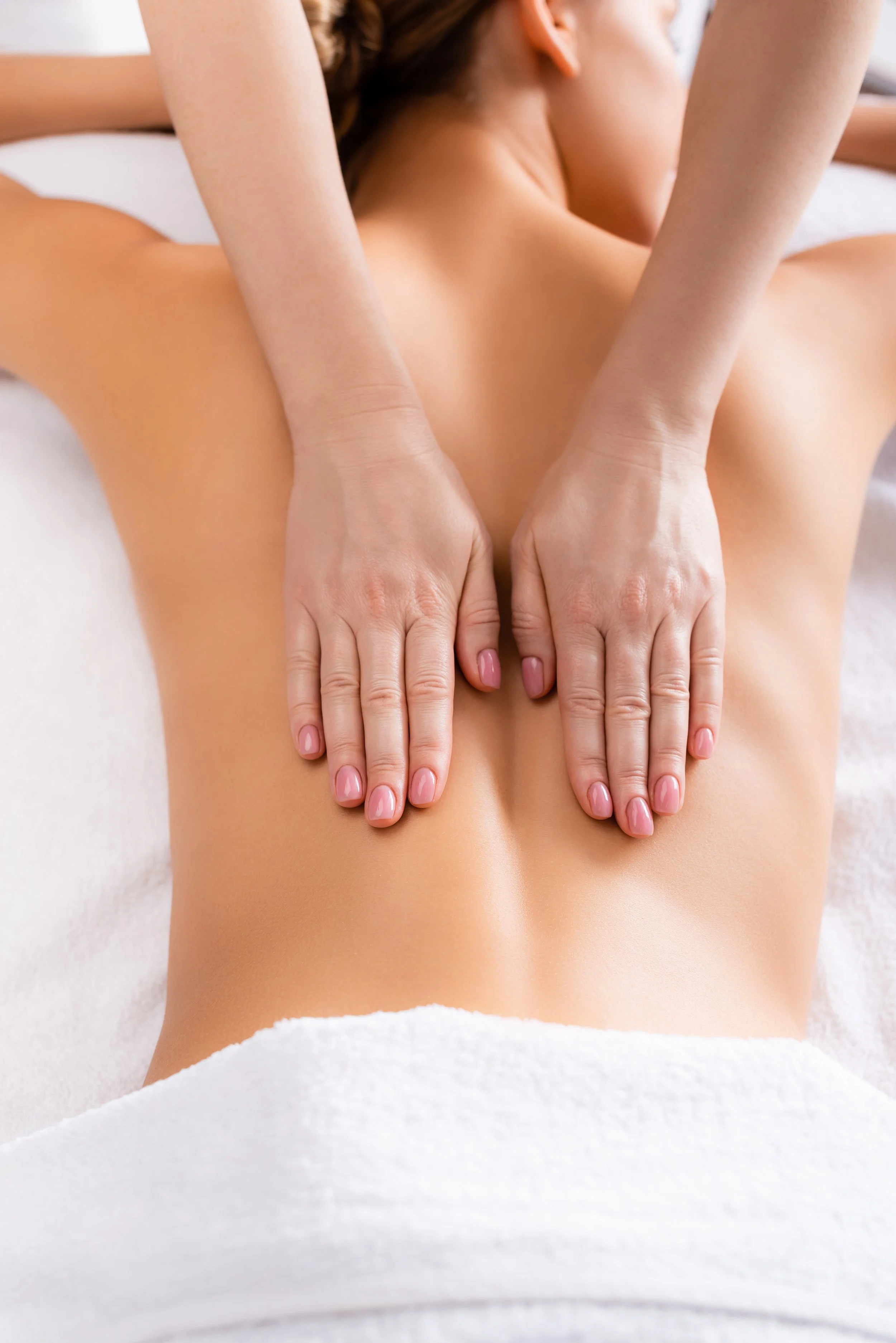
When skilled hands work on the body, something measurable happens. Massage stimulates the receptors in your skin and muscles that signal safety to the brain and this nudges the nervous system out of its fight or flight gear and into rest and digest. This is not a vague sense of feeling nicer. It is a real, observable shift in the branch of the nervous system that governs sleep.
Alongside that shift, massage has been shown to lower cortisol, the very hormone keeping you wired at night, while raising serotonin and dopamine, which support calm and mood. It works directly on the chemistry that menopause has thrown off balance.
And this is not just theory borrowed from other groups of people. It has been studied in women exactly like you. In one randomised controlled trial, postmenopausal women who received daily foot massage saw their sleep, fatigue and anxiety all improve compared with women who had no massage. In another, a course of therapeutic massage delivered twice a week measurably improved insomnia, low mood and quality of life in postmenopausal women, with the changes confirmed by sleep monitoring in the laboratory. And a 2024 controlled trial found that connective tissue massage relieved a broad range of menopausal symptoms and lifted quality of life, though it was honest that not every sleep measure shifted, a reminder that massage is one part of the picture rather than a cure-all.
The evidence is building towards something women have often sensed already. The right kind of touch helps the menopausal body remember how to rest.
Why a menopause specific approach matters
Here is the part I feel strongly about. Not any massage will do and I have written before about why women in menopause need more than a traditional massage.
A standard spa massage is lovely, but it is designed for a general body on a general day. It does not account for what is happening hormonally, or for the particular way stress, sleep and the nervous system tangle together at this stage of life. What menopausal women need is an approach built for this specific moment, one that understands the biology and works with it.
That is exactly why I created the Meno Massage Method®. It brings together a Mind and Body Reset that calms an overstimulated nervous system, with nutritional and lifestyle support, so that the treatment is not a one-off pause but part of helping you feel seen, supported and rebalanced. It is designed to guide your body out of that wired and tired state and back towards the rest it has been missing. Women leave feeling calmer, more grounded and sleep better.
Small things that help tonight
While a course of treatment does the deeper work, there are gentle things you can start this evening.
Keep your bedroom cool and dark, which helps with both temperature regulation and the wind down signal. Step away from screens in the last hour, since bright light tells your brain it is still daytime. Try a few minutes of slow breathing, making your out breath longer than your in breath, which is a direct, free way to nudge your nervous system towards its rest gear. And do not underestimate a few minutes of gently massaging your own neck, shoulders and feet before bed with a little oil. It is the same idea on a smaller scale.

The takeaway
If you are lying awake, wired and worn out, please hear this. Your body is asking for help. It has lost its way to the off switch, under the weight of shifting hormones and a nervous system that has been running too hot for too long.
And here is what I want you to hold on to. Rest can be relearned. With the right support, the right kind of touch and a few kind habits, your body can find its way back to sleep. You do not have to put up with the sleepless nights as though they are the price of being a woman over 50.
Ready to help your body remember how to rest?
If you are tired of being tired, the Meno Massage Method® was created for exactly this. Come and experience a treatment designed to calm your nervous system and support you through menopause and beyond. Book your treatment here and let us help you feel like yourself again.
Are you a therapist who wants to offer this to your own clients? Women are searching for this kind of care and there is a real gap for practitioners trained to give it. My next Meno Massage Method® training takes place in Stockholm on 5 to 6 September 2026. Find out about training here and join a growing community of therapists supporting women 40 plus.
References
Albayrak, G., Çağlıyan Türk, A. and Özgül, S. (2024) 'Effects of connective tissue massage on physical and emotional symptoms, insomnia, and quality of life in postmenopausal women: a randomized, sham-controlled trial', Maturitas, 190, 108130.
de Oliveira, D.S., Hachul, H., Goto, V., Tufik, S. and Bittencourt, L.R.A. (2012) 'Effect of therapeutic massage on insomnia and climacteric symptoms in postmenopausal women', Climacteric, 15(1), pp. 21-29.
Diego, M.A. and Field, T. (2009) 'Moderate pressure massage elicits a parasympathetic nervous system response', International Journal of Neuroscience, 119(5), pp. 630-638.
Field, T. (2010) 'Touch for socioemotional and physical well-being: a review', Developmental Review, 30(4), pp. 367-383.
Field, T., Hernandez-Reif, M., Diego, M., Schanberg, S. and Kuhn, C. (2005) 'Cortisol decreases and serotonin and dopamine increase following massage therapy', International Journal of Neuroscience, 115(10), pp. 1397-1413.
Gökbulut, N., Ibici Akça, E. and Karakayali Ay, Ç. (2022) 'The impact of foot massage given to postmenopausal women on anxiety, fatigue, and sleep: a randomized-controlled trial', Menopause, 29(11), pp. 1254-1262.