
Ozempic and Menopause: The Muscle and Bone Problem Nobody Is Discussing

Weight loss injections are everywhere. At dinner parties, in the school WhatsApp group, in the headlines and quite possibly in your own bathroom cabinet. Medications like Ozempic, Wegovy and Mounjaro have changed the conversation around weight almost overnight and women in the menopause transition are among the biggest users. In the United States around one in five women aged 50 to 64 has now used a GLP-1 medication, the highest rate of any age group (KFF, 2024).
I understand exactly why. After years of watching the scales creep up despite eating the same and moving more, many women feel these medications are the first thing that has actually worked. I am not here to judge that choice. As a registered nutritional therapist I have supported many women through this stage and my job is not to tell you whether to take a medication. That conversation belongs with your doctor.
My job is to tell you what happens to your body while you take one. Because there is a side to this story that is not being discussed nearly enough and for women over 45 it matters enormously. It is this: when you lose weight on a GLP-1 medication, you do not just lose fat. You lose muscle and bone too, at the exact stage of life when your muscle and bone are already under attack.
Let me explain what is going on and more importantly, what you can do about it.
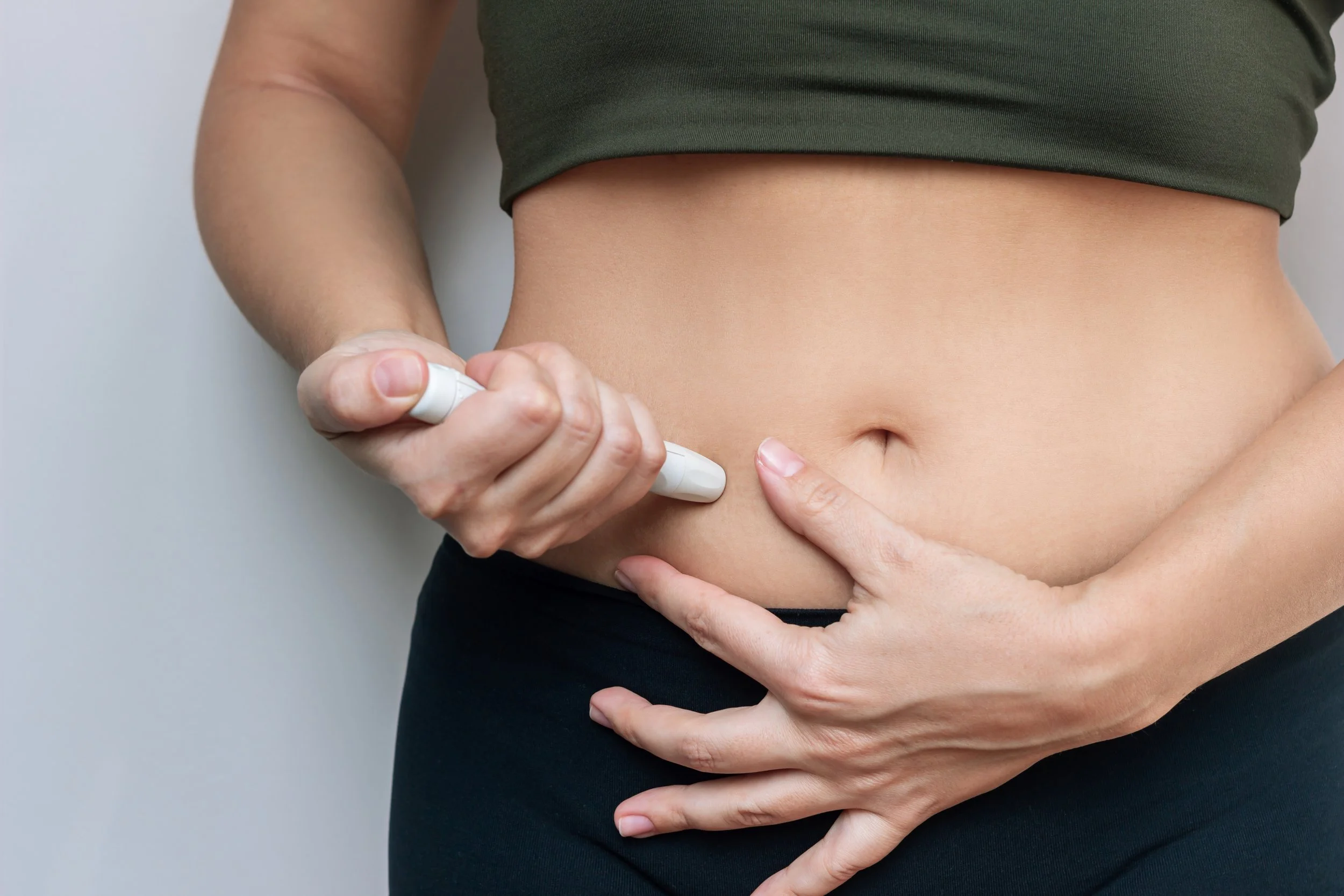
What do GLP-1 medications actually do?
GLP-1 receptor agonists, the family of drugs that includes semaglutide (Ozempic and Wegovy) and tirzepatide (Mounjaro and Zepbound), mimic a hormone your gut produces after eating. They slow stomach emptying, act on appetite centres in the brain and dramatically reduce hunger and food noise. The results in clinical trials have been striking, with semaglutide producing average weight loss of around 15 per cent of body weight over 68 weeks (Wilding et al., 2021) and tirzepatide even more (Jastreboff et al., 2022). That is genuinely remarkable. But look a little closer at those trial results and a quieter finding appears.
The problem: what you lose is not just fat
In the body composition sub study of the landmark semaglutide trial, roughly 40 per cent of the total weight participants lost was lean mass rather than fat (Wilding et al., 2021). Lean mass includes your skeletal muscle and losing a significant chunk of it is not a cosmetic detail. Muscle is your metabolic engine. It regulates blood sugar, supports your joints, protects you from falls and fractures and keeps your metabolism ticking over. Researchers writing in The Lancet Diabetes and Endocrinology have warned that this scale of muscle loss during medically induced weight loss deserves far more attention than it is getting (Prado et al., 2024).
Some loss of lean mass happens with any rapid weight loss. The concern with GLP-1 medications is the combination of very fast weight loss with a dramatically suppressed appetite. When you are simply not hungry, protein intake often collapses and when protein drops too low the body starts breaking down its own muscle for fuel.
Now here is why I want every woman over 45 to pay particular attention.

Why does this matter more in menopause?
Because menopause is already a muscle and bone story. Oestrogen is not just a reproductive hormone. It plays a direct role in maintaining muscle mass and strength, and its decline through perimenopause and beyond accelerates muscle loss and reduces the muscle's ability to respond to exercise and protein (Maltais, Desroches and Dionne, 2009).
The picture with bone is even starker. Women lose bone density fastest in the years immediately surrounding the final menstrual period, with studies showing losses of up to 10 per cent of bone mineral density across the menopause transition at the spine (Greendale et al., 2012). This is precisely why osteoporosis is so much more common in women than men.
So picture the situation. Your oestrogen is falling, which is quietly eroding muscle and bone. You then add a medication that produces rapid weight loss, of which a large share can be lean tissue, while simultaneously removing your appetite for the protein rich foods that protect muscle. Researchers at the University of Colorado have described this collision of menopause and GLP-1 use as a perfect storm for bone loss, warning that osteoporotic fracture rates may rise as a result (UCHealth, 2026).
None of this means the medications cannot be used well. It means they must not be used carelessly. The prescription may come from your doctor, but protecting your muscle and bone is a nutrition and lifestyle job and it is entirely in your hands.

How can you protect your muscle and bone on a GLP-1?
Here is what I focus on with clients in my clinic.
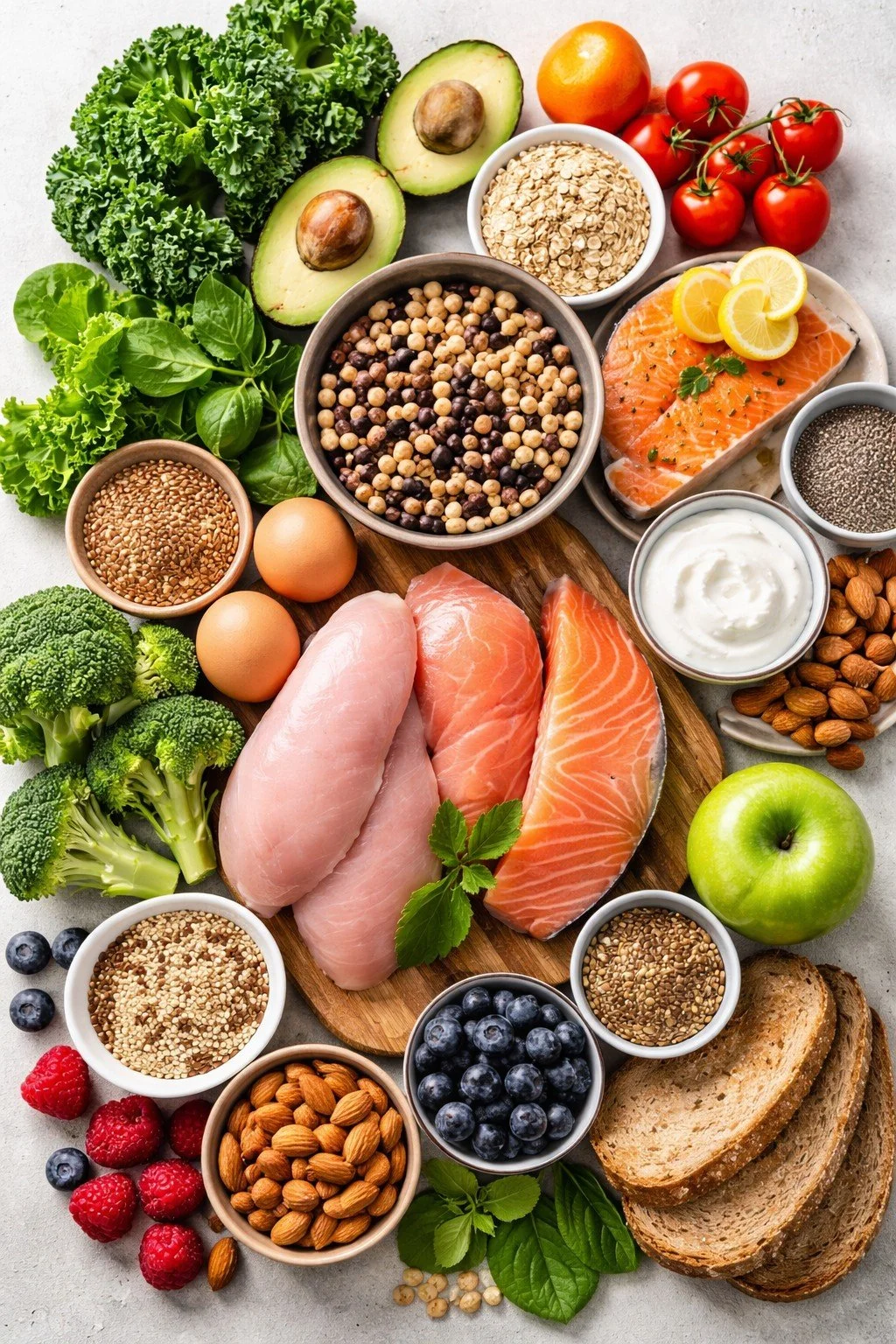
Make protein non negotiable. This is the single most important strategy. Aim for 25 to 30 grams of protein at each meal, whether or not you feel hungry, which is in line with expert recommendations of at least 1.0 to 1.2 grams of protein per kilogram of body weight daily for maintaining muscle as we age (Bauer et al., 2013). On a reduced appetite that often means protein first on the plate. Eggs, fish, poultry, Greek yoghurt, cottage cheese, tofu, beans and lentils all earn their place, and a good quality protein powder can be a practical bridge on days when eating feels like a chore.
Lift something heavy, twice a week. Resistance training is the signal that tells your body the muscle is needed and must be kept. Two strength sessions a week, using weights, resistance bands or your own body weight, makes a measurable difference to how much lean mass you retain during weight loss. Walking is wonderful but it will not do this job on its own.
Feed your bones. Calcium rich foods, adequate vitamin D (essential for those of us living in darker climates) and enough overall energy. Under eating on these medications is common and it compounds bone loss.
Slow and steady beats dramatic. The faster the loss, the greater the share that tends to come from muscle. This is a marathon, not a sprint, and dose and pace are conversations worth having with your prescriber.
Do not forget your hormones. Interestingly, emerging research suggests hormone therapy and GLP-1 medications may work rather well together, with a recent Mayo Clinic study finding that postmenopausal women using hormone therapy alongside tirzepatide achieved greater weight loss than those on the medication alone (Mayo Clinic, 2026). HRT also protects bone. If you are eligible and considering it, that is another conversation for your doctor.
The bottom line
Weight loss injections are not cheating and they are not a miracle. They are a powerful tool and like any powerful tool they demand respect. For women over 45 the stakes are simply higher because the muscle and bone you carry into your fifties and sixties will determine your strength, your metabolism and your independence for decades to come.
If you take one message from this blog, make it this. The medication changes your appetite, but it does not protect your muscle. That part is your job and with the right protein, the right training and the right support it is a job you can absolutely do well.
Want the full roadmap to protecting your body through menopause? My #1 bestselling book Have a Magnificent Menopause shows you exactly how to feel incredible inside and out. Link below.

Frequently asked questions
Does Ozempic cause muscle loss in menopausal women? Any rapid weight loss includes some lean mass, and trial data suggests around 40 per cent of weight lost on semaglutide can be lean tissue. Women in menopause are more vulnerable because declining oestrogen already accelerates muscle loss, which is why protein and resistance training are essential alongside the medication.
How much protein do I need on a weight loss injection? Aim for 25 to 30 grams per meal and at least 1.0 to 1.2 grams per kilogram of body weight daily. On a suppressed appetite, eat protein first at every meal.
Can I take HRT and a GLP-1 medication together? Early research suggests the combination may support both weight loss and bone protection but this is a decision to make with your doctor based on your individual health picture.
Should I stop taking my medication because of this? No. Never stop or change a prescribed medication without speaking to your doctor. The point is to support your body properly while you take it.
References
Bauer, J., Biolo, G., Cederholm, T., Cesari, M., Cruz-Jentoft, A.J., Morley, J.E., Phillips, S., Sieber, C., Stehle, P., Teta, D., Visvanathan, R., Volpi, E. and Boirie, Y. (2013) 'Evidence-based recommendations for optimal dietary protein intake in older people: a position paper from the PROT-AGE Study Group', Journal of the American Medical Directors Association, 14(8), pp. 542-559. https://www.sciencedirect.com/science/article/pii/S1525861013003265
Conte, C., Hall, K.D. and Klein, S. (2025) 'Is weight loss-induced muscle mass loss clinically relevant?', JAMA, 333(1), pp. 9-10. https://pubmed.ncbi.nlm.nih.gov/38829659/
Greendale, G.A., Sowers, M., Han, W., Huang, M.H., Finkelstein, J.S., Crandall, C.J., Lee, J.S. and Karlamangla, A.S. (2012) 'Bone mineral density loss in relation to the final menstrual period in a multiethnic cohort: results from the Study of Women's Health Across the Nation (SWAN)', Journal of Bone and Mineral Research, 27(1), pp. 111-118. https://pubmed.ncbi.nlm.nih.gov/21976317/
Jastreboff, A.M., Aronne, L.J., Ahmad, N.N., Wharton, S., Connery, L., Alves, B., Kiyosue, A., Zhang, S., Liu, B., Bunck, M.C. and Stefanski, A. (2022) 'Tirzepatide once weekly for the treatment of obesity', New England Journal of Medicine, 387(3), pp. 205-216. https://www.nejm.org/doi/full/10.1056/NEJMoa2206038?__cf_chl_f_tk=jEB7fW85kRn.37Tj5Sk8yrQwwa1RIT3d6_6xPpLxPYo-1783445867-1.0.1.1-I7Ke2vCGfDfFLHEyKcVfUwKrlL4baX3KvwV7k1vN_7c
KFF (2024) KFF Health Tracking Poll May 2024: The public's use and views of GLP-1 drugs. Available at: h (Accessed: 7 July 2026). https://www.kff.org/health-costs/kff-health-tracking-poll-may-2024-the-publics-use-and-views-of-glp-1-drugs/
Maltais, M.L., Desroches, J. and Dionne, I.J. (2009) 'Changes in muscle mass and strength after menopause', Journal of Musculoskeletal and Neuronal Interactions, 9(4), pp. 186-197. https://pubmed.ncbi.nlm.nih.gov/19949277/
Mayo Clinic (2026) New study links combination of hormone therapy and tirzepatide to greater weight loss after menopause. Available at: https://newsnetwork.mayoclinic.org/discussion/new-study-links-combination-of-hormone-therapy-and-tirzepatide-to-greater-weight-loss-after-menopause/ (Accessed: 7 July 2026).
Prado, C.M., Phillips, S.M., Heymsfield, S.B. and Gonzalez, M.C. (2024) 'Muscle matters: the effects of medically induced weight loss on skeletal muscle', The Lancet Diabetes and Endocrinology, 12(11), pp. 785-787. https://pubmed.ncbi.nlm.nih.gov/39265590/
UCHealth (2026) A 'perfect storm' for bone loss in women: menopause and GLP-1 weight loss drugs. Available at: https://www.uchealth.org/today/menopause-and-glp-1-weight-loss-drugs-and-bone-loss/ (Accessed: 7 July 2026).
Wilding, J.P.H., Batterham, R.L., Calanna, S., Davies, M., Van Gaal, L.F., Lingvay, I., McGowan, B.M., Rosenstock, J., Tran, M.T.D., Wadden, T.A., Wharton, S., Yokote, K., Zeuthen, N. and Kushner, R.F. (2021) 'Once-weekly semaglutide in adults with overweight or obesity', New England Journal of Medicine, 384(11), pp. 989-1002. https://pubmed.ncbi.nlm.nih.gov/33567185/